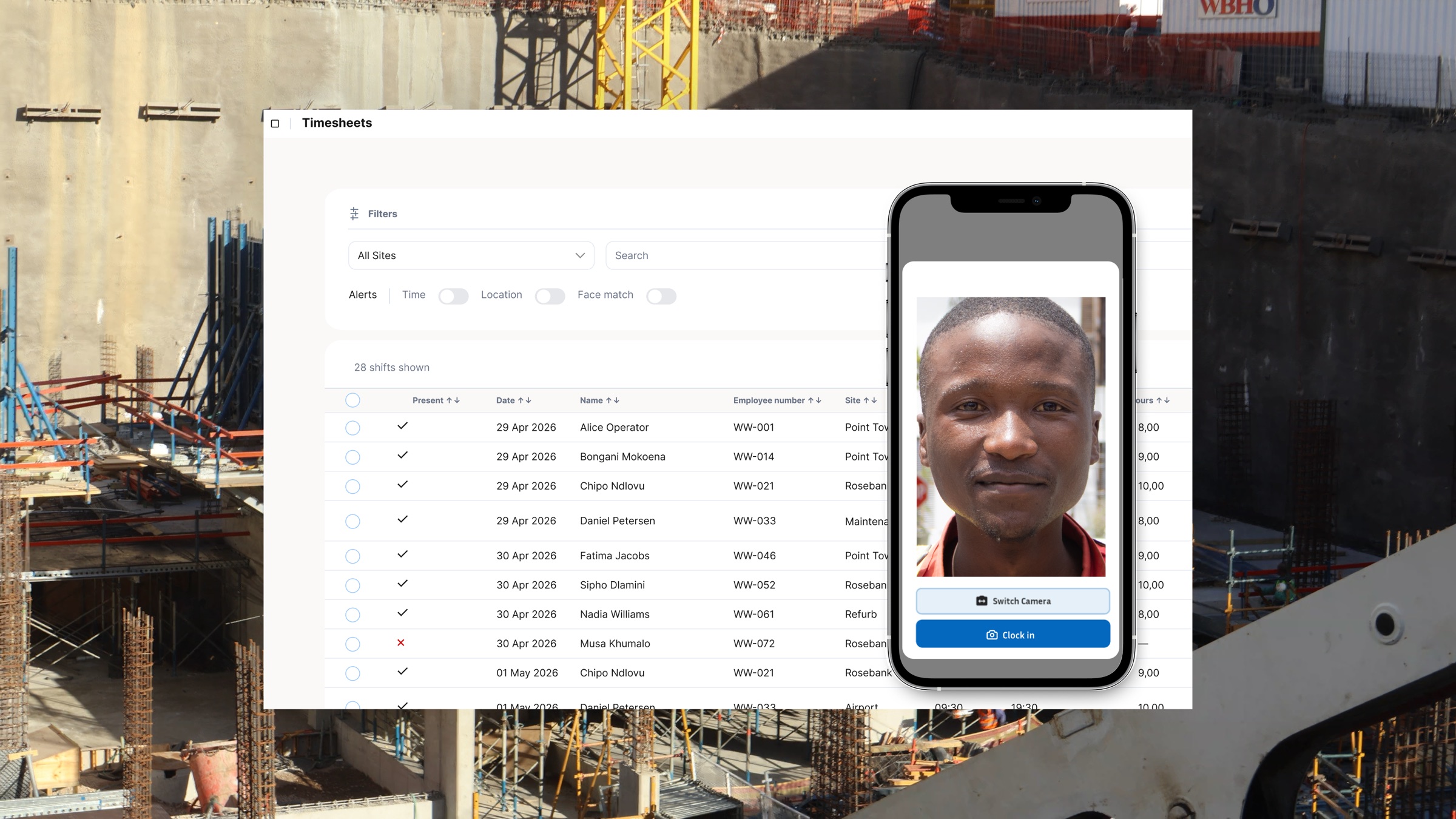
Tax-year mistakes in construction rarely begin inside tax itself. They usually start earlier, when time is captured badly, employment records are incomplete, or payroll is forced to guess what happened on site. By the time SARS, payroll, or a labour dispute exposes the problem, the real failure happened weeks or months before.
These are five of the most common time-tracking and payroll mistakes showing up on South African construction sites right now, and the practical fix for each one.
Mistake 1: Using the Wrong BCEA Threshold
As of 1 May 2026, the BCEA earnings threshold is R269,600.90 per year. Businesses that are still using an older figure risk classifying workers incorrectly for overtime, Sunday work, and public holiday pay. The most vulnerable cases are employees whose remuneration sits close to the line.
The fix is to make threshold review part of the payroll process, not a once-off memo. A payroll software South Africa setup that can flag workers near the threshold is safer than relying on one manual reminder every time the law changes.
Mistake 2: Onboarding Workers Without Clean Tax and Employment Records
High-turnover site work creates pressure to get people active quickly. That is how missing tax details, weak contract records, or incomplete worker profiles end up being fixed after the first clock-in instead of before it. By year-end, those shortcuts become reconciliation and payroll problems.
The fix is simple but disciplined. A time and attendance software process should tie first-clock access to a complete worker profile, including the core payroll and employment details the business needs to run a lawful pay cycle.
Mistake 3: Letting GPS or Site Data Drift Away from Payroll
Some businesses capture accurate GPS or site-based clocking data, then break the chain by retyping or adjusting hours somewhere else before payroll runs. Once the attendance record and the payroll record stop matching, the audit trail weakens fast. In a dispute, that looks worse than a simple admin mistake because the business can no longer explain the difference cleanly.
The fix is a single source of truth. Your attendance management system should produce payroll-ready records, and any manual correction should be logged against the original time entry instead of replacing it silently.
Mistake 4: Understating Leave for Short-Term or Fixed-Term Workers
Short contracts do not switch BCEA leave off. Annual leave accrues from the start of employment, and contract workers who complete a project can still leave with a payout owing. Many businesses either do not track that accrual properly or rely on a rough estimate at termination.
The fix is to calculate leave from the attendance record itself, using the correct BCEA accrual method. If your system cannot tell you how much leave a four-month worker has accrued without a manual reconstruction exercise, the process is already too weak.
Mistake 5: Paying Every Sunday the Same Way
Sunday work does not have one universal multiplier. Under the BCEA, the answer changes depending on whether Sunday is an ordinary working day for that employee. When businesses apply 1.5x across the board, they often underpay employees whose Sunday work should have been paid at double time.
The fix is to link contracts, rosters, and payroll logic properly. A time and attendance software workflow can tell you that Sunday work happened. It still needs the payroll rule to know whether that Sunday was ordinary work or premium work at the higher rate.
All Five Problems Share the Same Root Cause
Each mistake above starts with the same weakness: time data being captured in one place and employment or payroll decisions being made somewhere else. Every handoff creates another chance for the business to lose track of what actually happened on site.
A strong attendance management system does more than record clock-ins. It gives payroll software South Africa teams a dependable, auditable source of hours, sites, and exceptions, and it gives time and attendance software a direct role in compliance instead of leaving it as an isolated admin tool.
If your current process still depends on paper registers, spreadsheet rewrites, or end-of-month memory checks, the next tax-year problem is probably already forming. Fixing the time record first is what prevents most of the downstream payroll cleanup.