The Department of Employment and Labour published the Labour Law Amendment Bill, 2025 and the Labour Relations Amendment Bill, 2025 for public comment in February 2026. Those bills are still proposals, not final law. But for construction businesses that rely on casual, recurring, or contractor-labelled labour, they are a warning that workforce classification will get harder to treat loosely.
The central point is not that a new law suddenly turns every contractor into an employee overnight. It is that South African labour law already looks past the label on the contract and tests the real relationship. The draft bills increase the pressure on arrangements that already look and operate like employment in practice.
What Current Labour Law Already Does
Section 200A of the Labour Relations Act already creates a presumption of employment in certain circumstances for lower-earning workers. Control, supervision, economic dependence, integration into the employer's business, and who provides the tools or equipment all matter more than the heading on the agreement.
That means a worker who arrives daily on your site, works under your foreman's direction, uses your equipment, and relies mainly on your business for income can already sit in employee territory even if the paperwork says independent contractor. Labour law South Africa has never treated the contract label as the final answer on its own.
Why the Draft Bills Matter Anyway
The draft 2025 bills matter because they signal stronger protection for workers in more vulnerable and non-standard forms of work. For construction businesses, that points directly at the arrangements that depend on repeated casual engagement, on-call work, labour-only setups, or contractor labels used mainly for flexibility rather than genuine independence.
The safest reading is not that every detail is settled already. It is that the policy direction is clear enough for businesses to stop pretending the risk is theoretical. If a relationship would be difficult to defend under current law, it is unlikely to become easier to defend under a tighter regime later.
What Reclassification Costs in Practice
Once a worker is treated as an employee, the cost picture changes immediately. Payroll software South Africa teams need to process PAYE, UIF, and SDL correctly. BCEA working-time rules can apply. Annual leave, sick leave, and dismissal protections come into scope. Weak records turn each one of those obligations into a reconstruction exercise.
This is why contractor-versus-employee disputes rarely stay legal for long. They become payroll disputes, leave disputes, overtime disputes, and record-keeping disputes at the same time. A workforce management software setup that only knows who showed up, but not what status they should be treated under, is not enough protection.
Which Construction Arrangements Need Review First
- Workers who report to the same site or supervisor day after day on a predictable pattern
- People labelled as contractors but using the company's tools, PPE, or site systems as part of ordinary operations
- Individuals who derive most of their income from one construction business
- Recurring casual labour that is being managed like a permanent crew except for the contract label
Why Records and Systems Decide the Outcome
If a dispute reaches the CCMA or the Labour Court, the employer with the better records is in a stronger position. You need to show how the work was actually arranged, who controlled the hours, what was paid, and whether the worker's attendance matched the relationship described on paper.
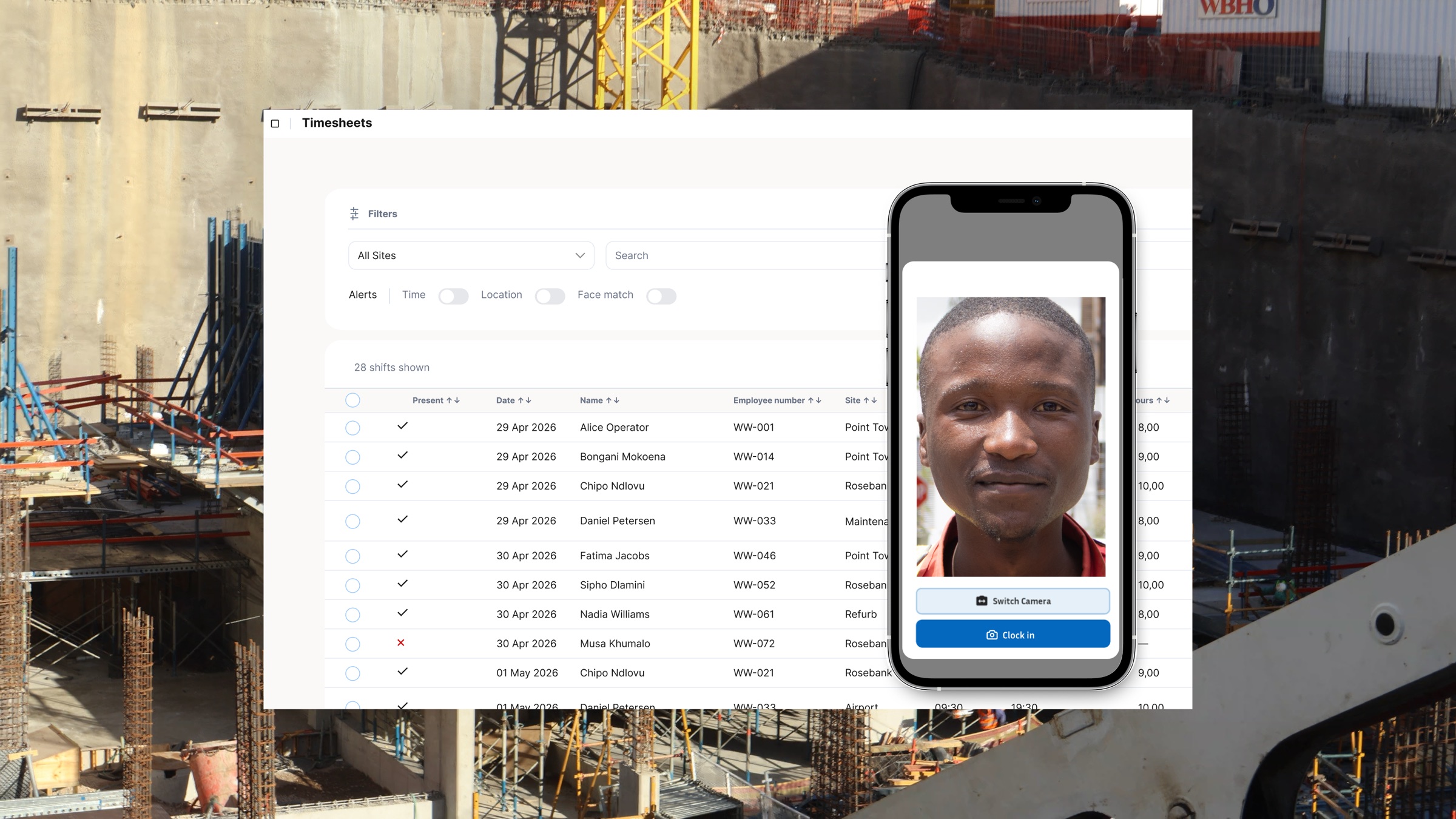
That is where workforce management software and payroll software South Africa tools matter. They are not just admin systems. They are the evidence trail behind classification, hours, overtime exposure, and leave balances across multiple sites.
What To Do Before the Bills Move Further
Start with an audit of the relationships that look most like employment already. Review the contract, the supervision model, the tools used, the hours worked, and the worker's economic dependence on the business. If the substance points toward employment, the business should stop relying on the label alone.
Then review whether your records could survive a dispute. If hours, sites, and payments are still scattered across paper files and disconnected systems, the problem is bigger than legal wording. It is operational weakness. The businesses that will handle any eventual reform best are the ones that clean up those records before the law forces the issue.