Sunday shifts and public holiday work are where otherwise tidy payrolls start to unravel. Construction businesses often know there is a premium rate involved, but they apply one blanket multiplier to every weekend shift and hope it holds up. Under the BCEA, that is not how it works.
The rule changes depending on whether Sunday is an ordinary working day for that employee, whether the employee actually worked on the public holiday, and whether the employee is covered by the BCEA working-time sections in the first place. From 1 May 2026, those working-time protections generally apply to employees earning at or below the official earnings threshold of R269,600.90 per year.
What the BCEA Says About Sunday Pay
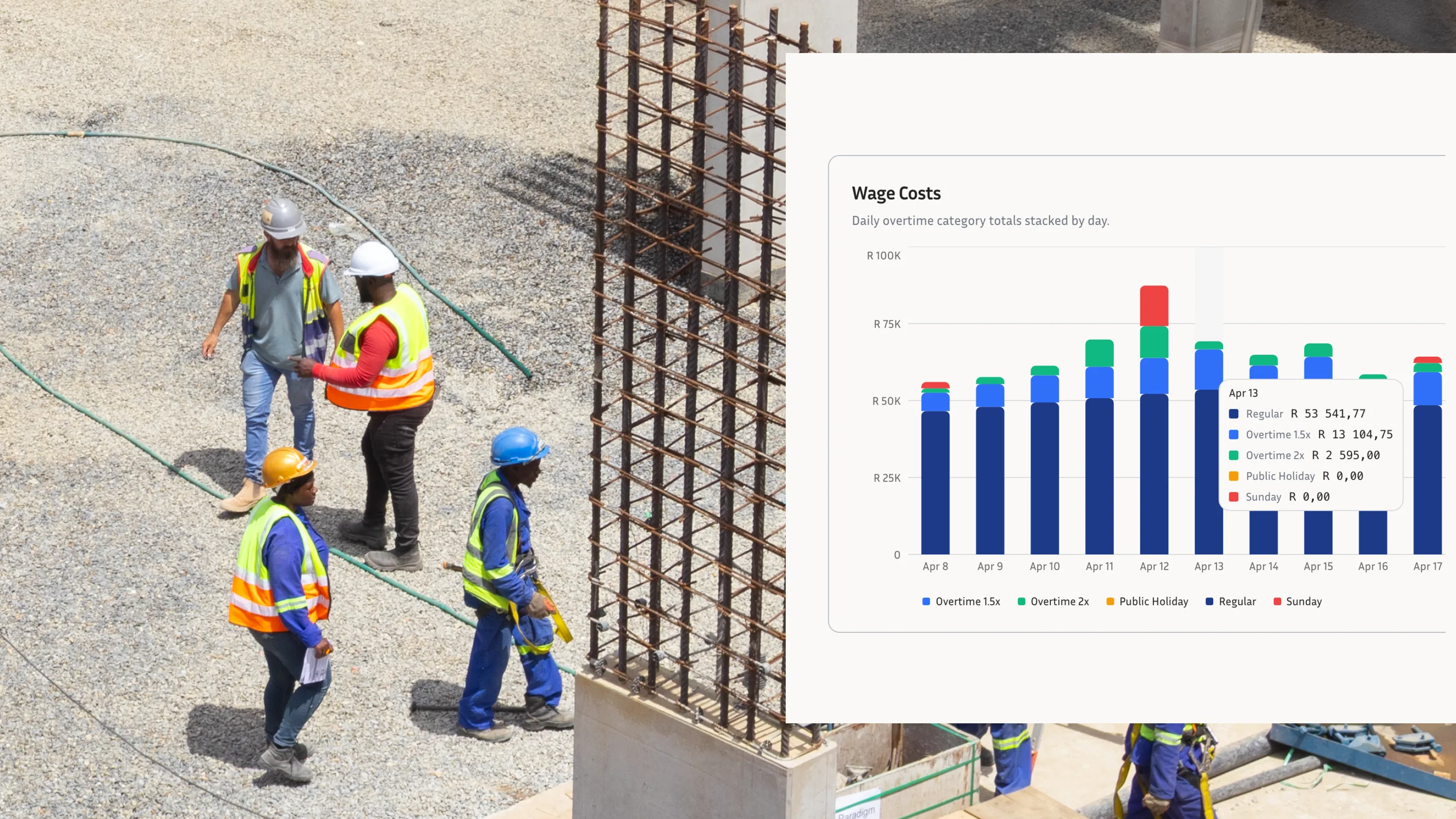
Section 16 of the Basic Conditions of Employment Act is direct. If an employee works on a Sunday and does not ordinarily work Sundays, the employer must pay double the employee's wage for each hour worked. If the employee ordinarily works on Sundays, the minimum rate is one and one-half times the employee's wage for each hour worked.
The same section also says that if the employee works less than their ordinary shift on a Sunday and the Sunday-rate calculation would leave them below their ordinary daily wage, the employer must still pay the ordinary daily wage. That detail is easy to miss, and it is one of the reasons Sunday work should never be processed as a rough manual estimate at month-end.
For construction businesses, the practical question is simple: have you contractually established Sunday as an ordinary working day for that specific worker. If you have not, the safer assumption is not 1.5x. It is double time.
What the BCEA Says About Public Holiday Pay
Section 18 deals with public holidays. If a public holiday falls on a day on which an employee would ordinarily work and the employee does not work, the employer must still pay at least the wage the employee would ordinarily have received for that day.
If the employee does work on that public holiday, the employer must pay at least double the ordinary amount for that day, or the ordinary day's pay plus the amount earned for the time worked, whichever is greater. If the public holiday falls on a day the employee would not ordinarily work but the employee does work, the employer must pay the ordinary daily wage plus the amount earned for the work performed that day.
This is where construction payroll often goes wrong. A Sunday rate gets copied onto a public holiday. A public holiday is paid as ordinary overtime. Or the payroll team has no way to see whether the worker would ordinarily have worked that day, so the system defaults to one generic setting for everyone.
Why Construction Payroll Trips Over This
Construction schedules change constantly. Weekend shutdown work, maintenance windows, catch-up shifts, and client deadlines all create exceptions. When the attendance record does not classify day type clearly, the person running payroll has to reconstruct whether the shift was an ordinary weekday, a Sunday, or a public holiday from a paper register or a WhatsApp message.
That is a weak control environment. A premium-rate rule only works when the underlying time record shows exactly when the employee clocked in, when the shift ended, and what day type applied. Without that, even correct pay can be hard to prove in a dispute or tender audit.
What Your Records Must Show
The BCEA requires payroll and time records to be kept for at least three years. For Sunday work and public holiday work, those records should show the employee, the site, the day worked, the hours worked, and the rate applied. If Sunday is treated as an ordinary working day for a specific employee, the contract or roster basis for that treatment should also be clear.
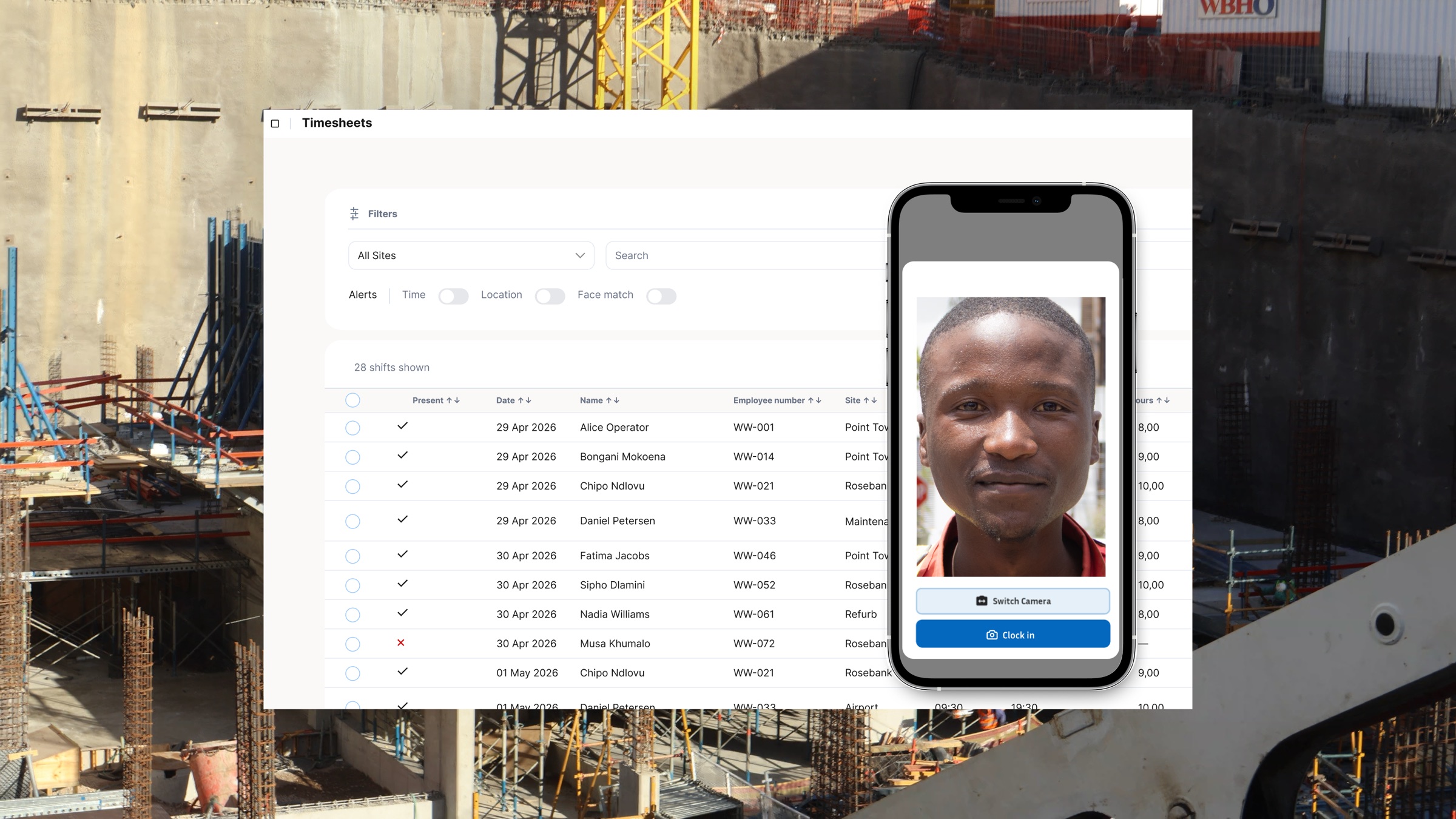
A proper clocking system helps because it captures the day and time automatically, separates Sunday and public holiday shifts cleanly, and gives payroll a dependable base for the calculation. If your current process cannot tell you quickly which Sunday shifts were ordinary Sunday work and which were not, the compliance gap is already there.
Fix the Rule Before the Next Weekend Run
Audit the people who work Sundays first. Confirm whose contracts or rosters make Sunday an ordinary working day and whose do not. Then check whether your payroll settings actually reflect that difference and whether public holiday shifts are being treated separately from normal overtime.
Construction businesses do not need more complicated payroll rules here. They need the correct ones. If your site teams can capture time accurately and your payroll process can distinguish Sundays, public holidays, and ordinary overtime cleanly, most of this risk disappears before the next pay run.