A new worker shows up on site at 6am on a Monday. Someone hands him a clipboard, he fills in a form with a borrowed pen, and by Tuesday those forms are buried under delivery notes in a dusty site office. That is how most South African construction businesses handle onboarding, and it is why payroll errors, CCMA disputes, and SARS rejections keep landing on the same site managers who were too busy to slow down at the start.
What Your Onboarding Documentation Must Actually Cover
South African labour law sets minimum documentation requirements from the moment someone starts work, not from the moment a formal contract is signed. The Basic Conditions of Employment Act requires written particulars of employment at the start of employment for covered employees. Any overtime agreement under Section 10 should be agreed and documented before the worker does overtime, not after the fact when pay is contested. These are not HR formalities; they are the documents that determine what you can defend if something goes wrong.
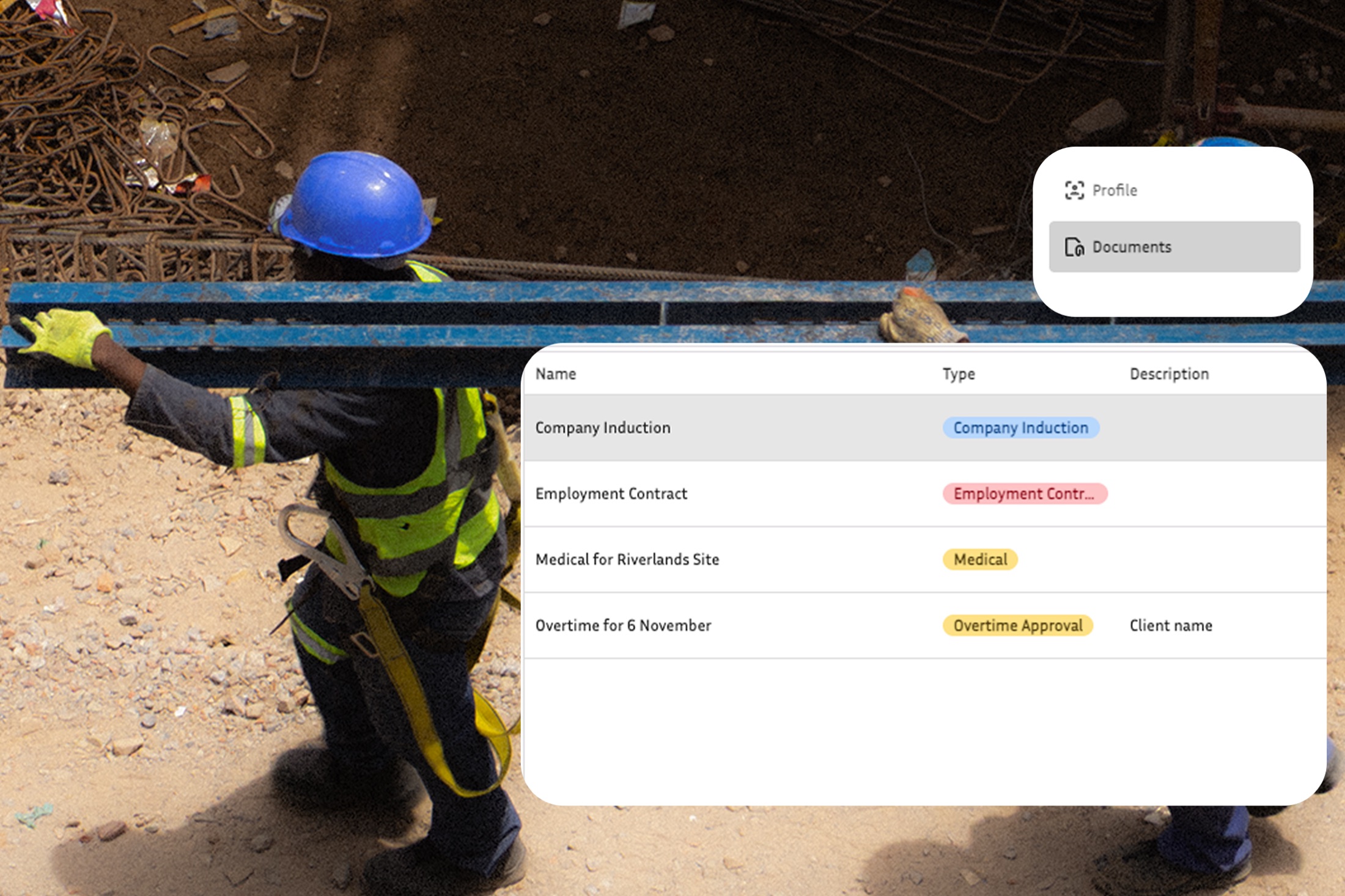
The records every construction worker onboarding should produce are: written particulars or a contract pack specifying role, wage, working hours, and whether the arrangement is permanent, fixed-term, or casual; a documented BCEA Section 10 overtime agreement where overtime is expected; personal particulars including full name, ID number, banking details, and emergency contact; an Income Tax Reference Number where SARS requires one for EMP501 compliance; a UIF declaration; and a site induction with OHS acknowledgements signed and filed. Each of these documents feeds a downstream system. The TRN goes to payroll software South Africa before the first pay run where it is required. The overtime agreement determines how extra hours are calculated under BCEA overtime rules. Banking details must match the payroll record to the cent before wages are processed.
Missing any one of these at onboarding does not cause a problem today. It causes a problem three months from now, when you cannot find the record.
Why Paper Onboarding Creates Payroll Problems Downstream
A handwritten bank account number transcribed into a payroll system by a tired admin person is a single point of error that can take two pay cycles to unravel. Paper forms on a construction site get wet, torn, misfiled, and lost. Even when they survive the site, they create a second problem: no one can tell whether the document was the original or a replacement, and no timestamp tells you when it was signed.
When documentation is incomplete at onboarding, the consequences accumulate across the employment relationship. A missing TRN for an employee who requires one can mean the EMP501 filing is rejected by SARS, often weeks after submission when the damage is already done. A vague employment classification leaves the business exposed to reclassification claims if proposed labour-law changes progress. An unsigned Section 10 agreement leaves the employer exposed when overtime was worked and pay is later contested. These are not theoretical risks; they are the disputes that reach CCMA hearings on a regular basis in the construction sector.
Labour law South Africa does not distinguish between a permanent office and a remote civil site. The obligations apply from the first day of work on every project, regardless of crew size or contract duration.
The Link Between Onboarding and Your Clocking System
Most construction businesses treat onboarding documentation and clocking setup as two separate processes handled at different desks on different days. That separation is where accuracy breaks down. A worker who is not registered in the clocking system for employees on their first shift cannot be tracked correctly from the start. Hours get recorded manually or by memory, and by week two there is a payroll discrepancy that nobody can explain.
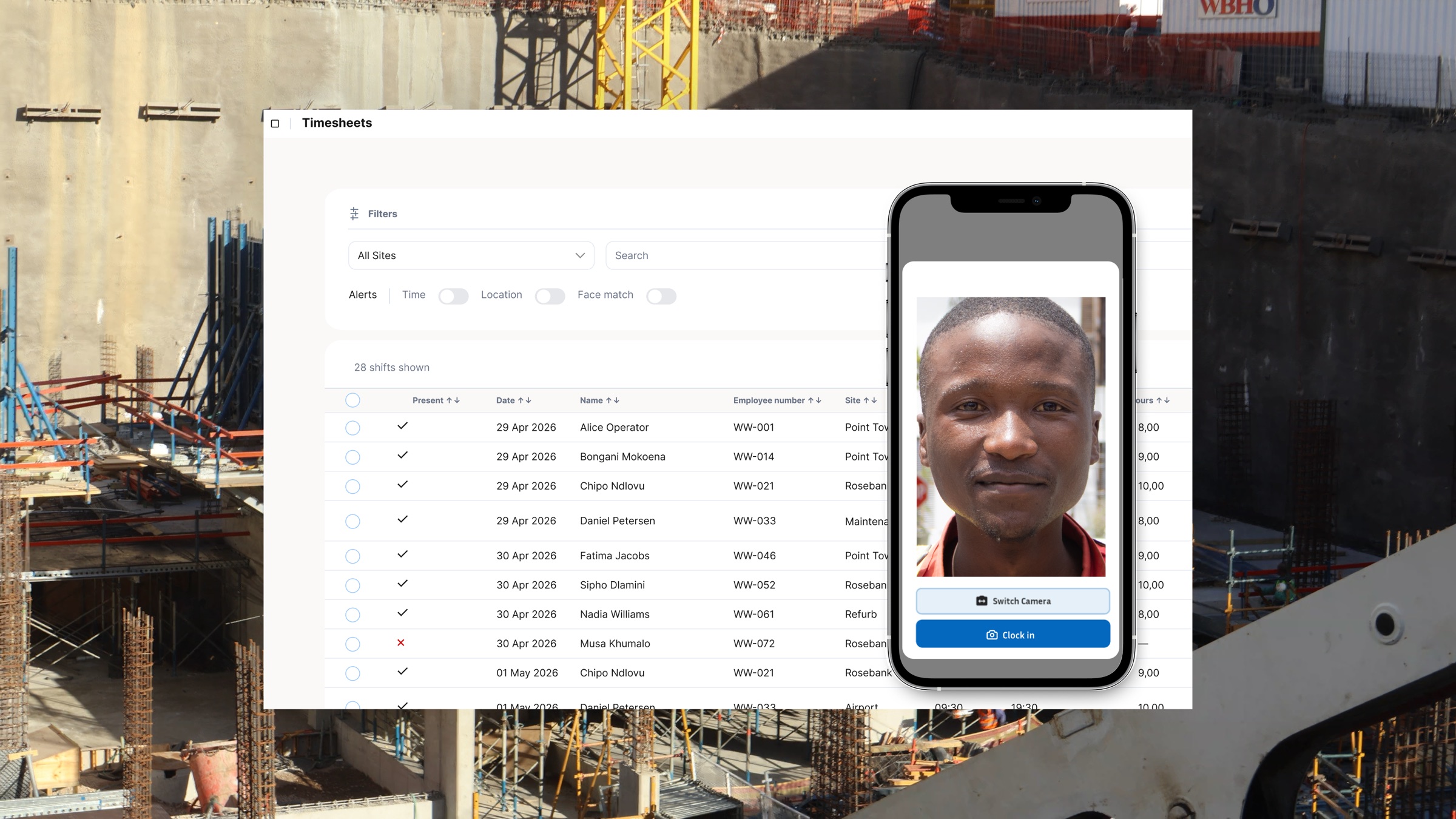
Setting up a worker on the clocking system at onboarding accomplishes several things simultaneously. It creates the attendance management system baseline that every subsequent hour is measured against. For businesses using facial clocking, the facial profile enrolled on day one is the same profile matched on every shift that follows, which means identity verification is built in from the start rather than retrofitted after a buddy punching incident. On multi-site operations, a workforce management software platform ties that worker profile to specific sites, cost codes, or projects so that labour costs are tracked by location from their first hour.
The clocking system also surfaces compliance gaps early, before they reach payroll. If a worker has no TRN loaded in the system, the payroll run can flag it before submission to SARS. If the Section 10 overtime agreement has not been signed, the system holds an alert against that worker's profile before overtime hours are approved. These are not features most site managers associate with onboarding, but they are exactly where payroll problems begin.
Building a Repeatable Checklist That Works Across Multiple Sites
A consistent onboarding process does not mean every site runs it the same way with the same people. It means every site produces the same outputs: the same documents, the same clocking profile, the same payroll record. The process can flex to site conditions; the outputs cannot.
For businesses managing multiple sites, the risk is highest where onboarding happens informally, with a site foreman handling it on the fly for day labourers and nothing getting captured consistently. Labour law South Africa applies equally across every site and every crew, whether it is a permanent installation or a two-week subcontract. A practical standard checklist that travels across sites should include: ID copy, bank details, TRN, and emergency contact collected; employment contract and overtime agreement signed; facial or biometric clocking profile enrolled; worker loaded in the payroll software South Africa platform with correct rate and tax status; annual leave entitlement opened from the start date; and OHS induction acknowledgements filed.
HR software South Africa platforms that integrate with your clocking system make this faster because each step in the checklist updates the same worker record. You capture the information once and the system distributes it rather than entering the same data in three separate places. That is where data entry errors stop.
What Incomplete Onboarding Actually Costs
The cost of rushed onboarding documentation is not the time it takes to redo the paperwork. The real cost shows up three to six months later, in the disputes you cannot resolve cleanly.
A CCMA claim where the worker contests their leave balance and you have no digital trail from their start date is harder to defend. A SARS EMP501 rejection because a large share of your seasonal workers are missing required TRNs creates a reconciliation backlog that can attract administrative penalty exposure under the Tax Administration Act. A pay run where banking details are wrong means wages do not arrive, and you have an immediate obligation to remedy it. These are the downstream costs of onboarding documentation that was treated as an afterthought rather than a foundation.
Construction businesses that use a time and attendance software platform tied to their onboarding process have a structural advantage in disputes. Every piece of information captured at onboarding sits in the same system as the clocking records. When a worker contests hours worked, the timestamp evidence is already there. When a CCMA arbitrator asks for employment records, the documents and the attendance data are linked in one place. The employee documentation requirements for SA construction are detailed but manageable when they sit inside a live system rather than a paper file.
Making the Process Fast Enough That Sites Actually Use It
Construction sites move fast, and site managers face real pressure to get workers productive early rather than spending the first hour on admin. The answer is not to shorten the onboarding process; it is to make it fast enough that skipping it never feels like the practical option.
Digital onboarding, where a worker completes their details on a tablet at the site gate captured directly into the clocking system for employees, takes significantly less time than a paper-based process. Facial enrolment on a biometric clocking system takes under a minute. A trained gate supervisor or admin person can run the process without taking the site manager away from the job. On larger sites, a fixed 15-minute onboarding slot at the start of the first rostered shift covers the core checklist without disrupting operations.
The key is treating the clocking system as part of the induction itself, not as a separate tech step that happens later. When a worker is enrolled on the clocking system for employees on their first shift, their record is live from day one, verified from day one, and ready for payroll review at the end of every week. That is the practical return on ten minutes of structured onboarding documentation upfront. To see how other SA construction businesses have built this into daily site operations, the WorkWeek case studies show the before-and-after in real terms.
Onboarding Documentation Connects to Every Compliance Obligation That Follows
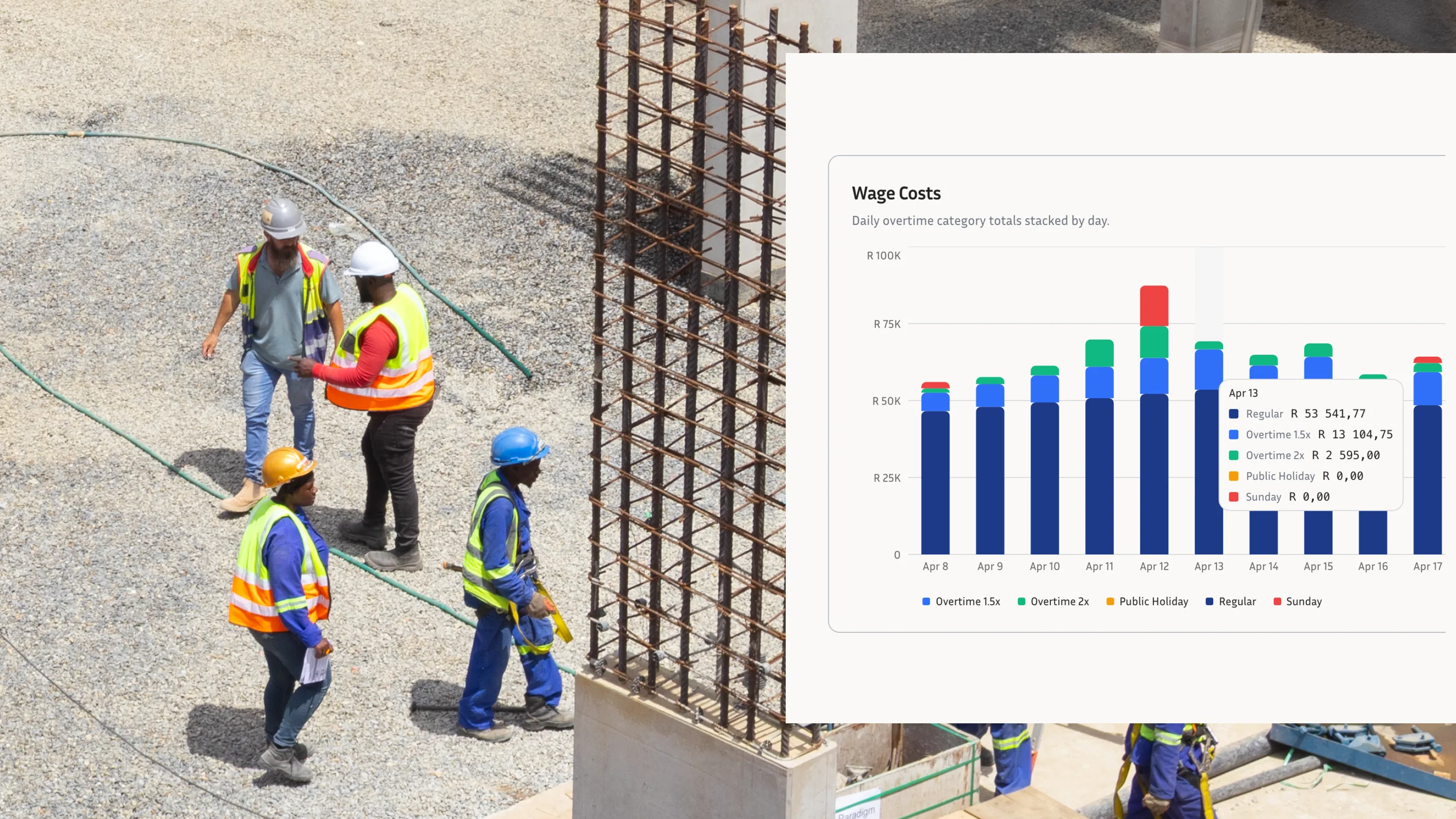
Getting onboarding right is not just about the first week. The quality of documentation produced at onboarding determines the quality of every payroll run, every BCEA compliance audit, and every SARS submission for the duration of that worker's employment. An annual leave calculator South Africa calculation is only as accurate as the start date and leave type captured on day one. The BCEA overtime calculator only produces the right number if the wage rate in the payroll system matches the rate in the signed contract.
A workforce management software platform that keeps onboarding and clocking data aligned with payroll-ready records removes the manual steps where errors enter the process. Instead of transferring information between systems by hand, the onboarding record and clocking profile use the same verified worker details. Labour law South Africa compliance stops being a separate audit exercise and becomes a natural output of how the business already tracks its workforce. That shift does not require a new HR department; it requires the right tools and a standard process that every site runs consistently.
Onboarding documentation in construction is the foundation of every payroll run, every CCMA response, and every SARS filing that follows. A clocking system for employees that activates on day one, payroll-ready worker data from the start, and a document checklist that produces the same outputs across every site: those three things together remove the gaps that create problems later. If your current process relies on paper forms and informal handoffs, book a demo with WorkWeek to see how other South African construction businesses have made onboarding documentation a compliance asset rather than an ongoing liability.