The final weeks of a construction project are where payroll mistakes get expensive. Workers get demobbed, contracts end, and someone needs to calculate leave, settle overtime, issue certificates of service, and close out UIF declarations. Get any of it wrong and CCMA disputes can arrive months after the site is cleared.
What Labour Law South Africa Requires at Close-Out
The Basic Conditions of Employment Act applies when employment ends, whether the worker was on a fixed-term contract, casual arrangement, or permanent contract. Labour law south africa requirements include notice, final pay, leave payouts, certificates of service on request, and accurate employment records. Those obligations do not disappear because the project programme is complete.
- Notice periods under BCEA Section 37 depend on length of service, with one week, two weeks, or four weeks applying in common scenarios.
- Certificates of service under Section 42 must be issued when requested and must include the worker, employer, dates, job description, and remuneration details.
- Leave payouts under Section 40 must cover accrued but untaken annual leave at the employee's full remuneration at termination.
- UIF declarations must be handled promptly at employment end, which becomes difficult if monthly records were weak during the project.
Calculating Leave Payouts That Do Not Come Back
The leave calculation most construction businesses get wrong is the pro-rata payout for shorter-tenure workers. Under the BCEA, workers who complete less than 12 months can accrue leave at one day per 17 days worked when the employment agreement uses that alternative method. Otherwise, the baseline annual leave entitlement remains 21 consecutive days per annual leave cycle, often treated as 15 working days per 12 months.
Those formulas produce different figures. Applying the wrong formula to the wrong worker is a routine close-out error. A time and attendance software system connected to leave data reduces that risk because it knows how many days were actually worked.
The same clocking system for employees should also capture informal leave correctly during the project. If a worker took a Thursday off and the foreman never recorded it, the leave balance may be inflated. That error lands in the final payout unless the attendance record catches it.
Settling Final Overtime Before You Demob
Outstanding BCEA overtime is one of the biggest sources of payroll disputes after a project ends. Workers know how many Saturdays they worked and how many times they stayed late. If the final pay run does not match the record, the dispute follows you off-site.
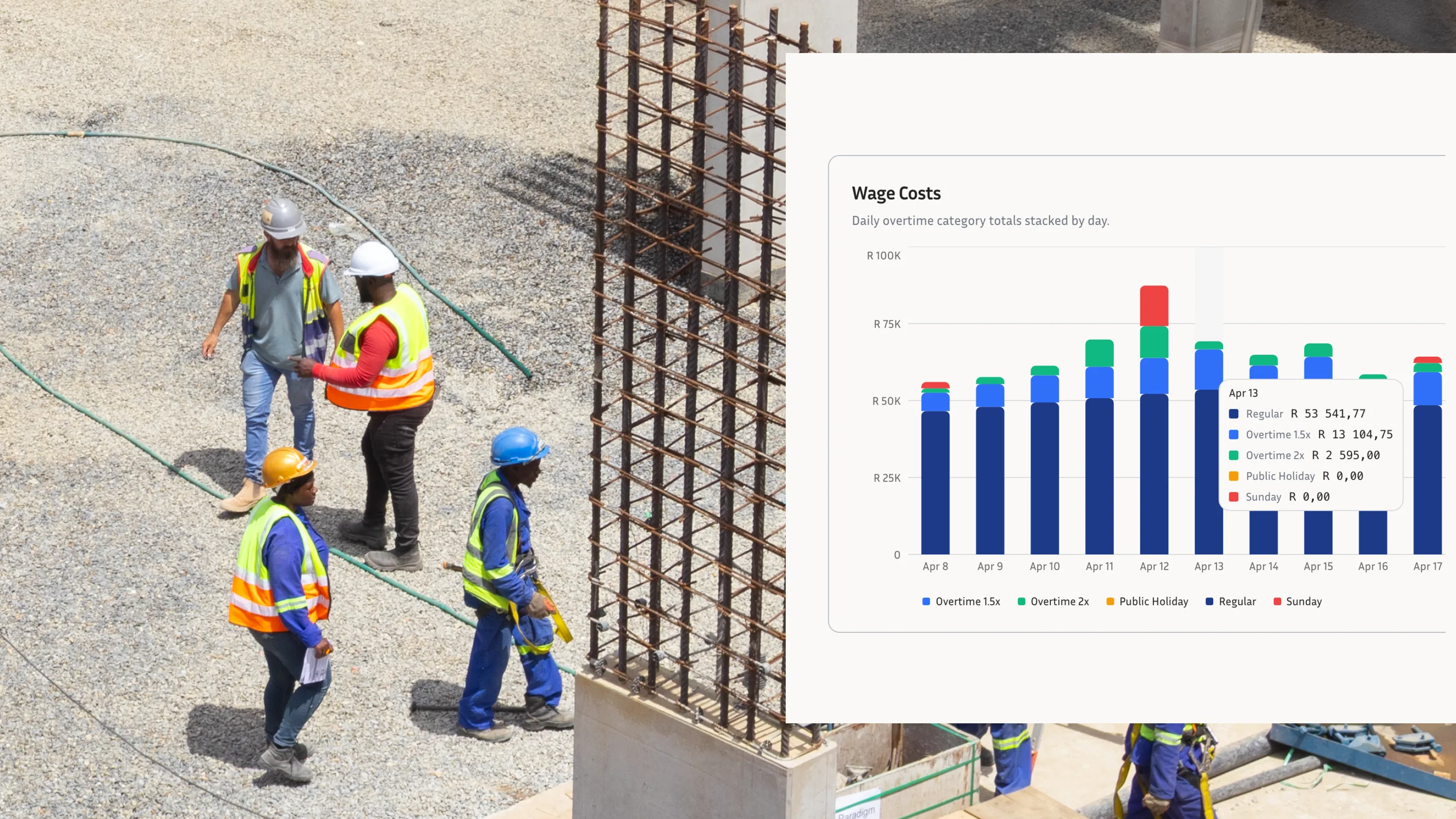
For covered workers, the ordinary BCEA rule is 1.5 times the normal wage for overtime beyond 45 ordinary hours per week, with separate Sunday and public-holiday rules. The formula only produces a correct result if the hours data is accurate. An attendance management system with verified clock-ins gives payroll a defensible starting point.
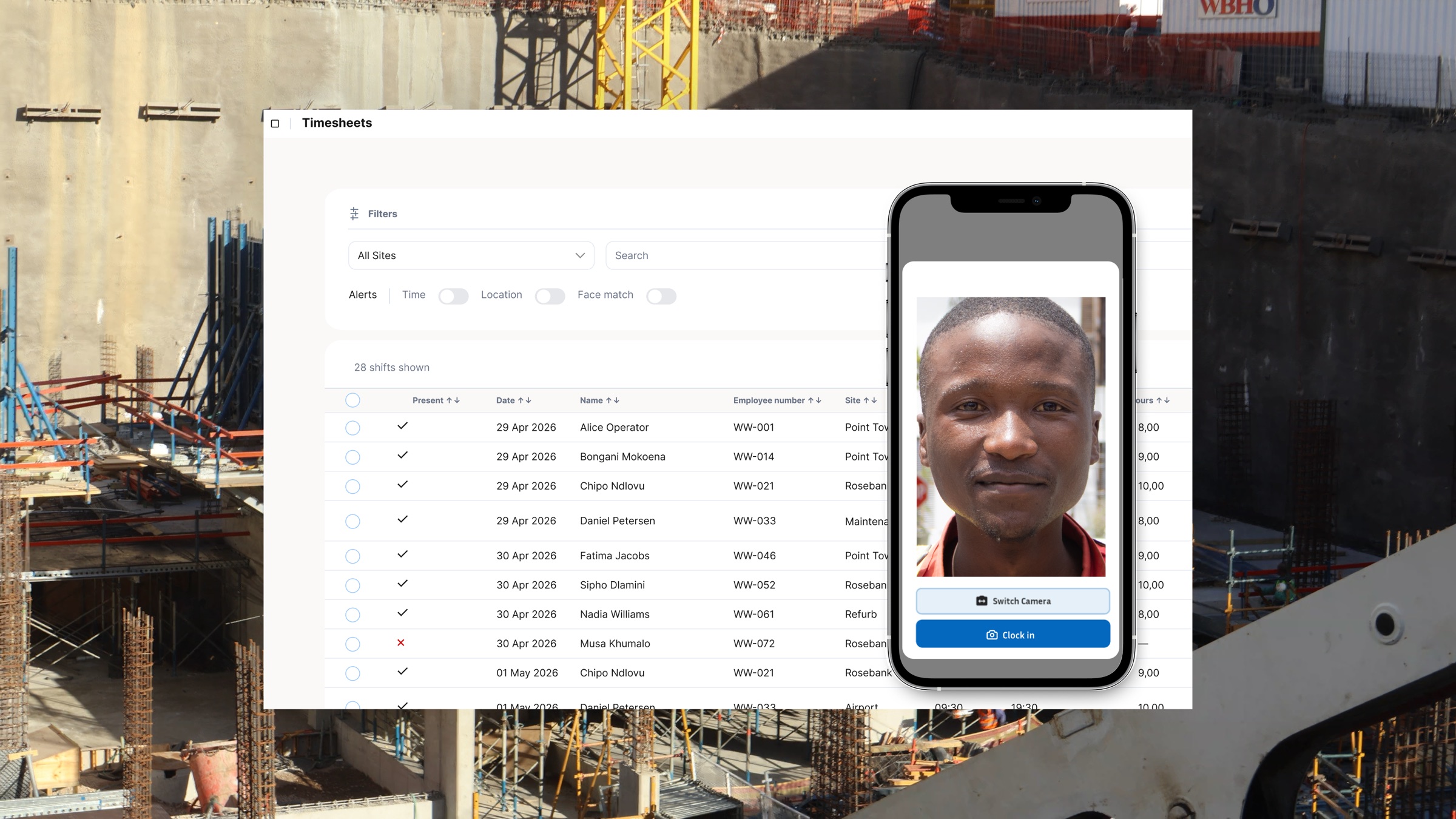
Before the final payroll run, export a full hours report for every worker. Flag weeks above 45 hours, apply the correct overtime rules, cross-reference captured leave days, and issue the final payslip from verified data. Payroll software south africa integrations are only as reliable as the clocking data they receive.
The Clocking Records That Protect You Later
CCMA matters do not always arrive promptly. A worker may file a dispute two or three months after your team has moved to the next site. When that happens, your evidence is whatever records were maintained during the project.
A proper employee clocking system generates a timestamped record for every in-and-out event, tied to a verified identity. Facial clocking and GPS verification show who was on site, when they were there, and where the record was captured. Paper books and shared PIN terminals are easier to challenge.
Workforce management software keeps those records centralised across projects. You are not relying on a spreadsheet saved on one foreman's laptop. The records remain searchable after the project closes and the crew has moved on.
Make Exits Repeatable Across Every Project
- Confirm the final verified clock-in date for every worker.
- Pull each worker's leave balance from the leave management record.
- Calculate outstanding overtime from verified attendance records.
- Confirm notice served or pay in lieu where applicable.
- Prepare certificates of service for workers who request them.
- Submit the UIF close-out data from accurate employment dates.
Project completion is the last point at which you control the payroll narrative for every worker on site. Accurate leave payouts, settled overtime, certificates of service, and verified clocking records are the difference between a clean close and a dispute. WorkWeek's clocking system for employees, payroll software south africa integrations, and workforce management software records help construction teams close projects with data they can defend. A clocking system for employees is most valuable at close-out when every final rand needs proof behind it.