South Africa's construction sector grew 0.3% in Q1 2026, and the pipeline ahead looks more substantial: Cape Town has committed R39.7 billion to infrastructure, 63 public-private partnership projects are in active development nationally, and Big 5 Construct SA is returning. For SMME contractors, the opportunity feels real. But Stats SA data points to a structural problem the recovery alone will not fix: SMME firms employ 45% of the construction workforce yet capture only 21% of sector income. Winning more work is not the same as making more money.
The Wage Squeeze Tightening on SMME Contractors
Construction employment is growing at roughly 3% annually, but the infrastructure pipeline is accelerating well beyond that rate. When labour demand grows faster than available supply, wages move. SMME contractors feel this pressure more directly than larger firms because labour typically makes up a higher proportion of their total project cost.
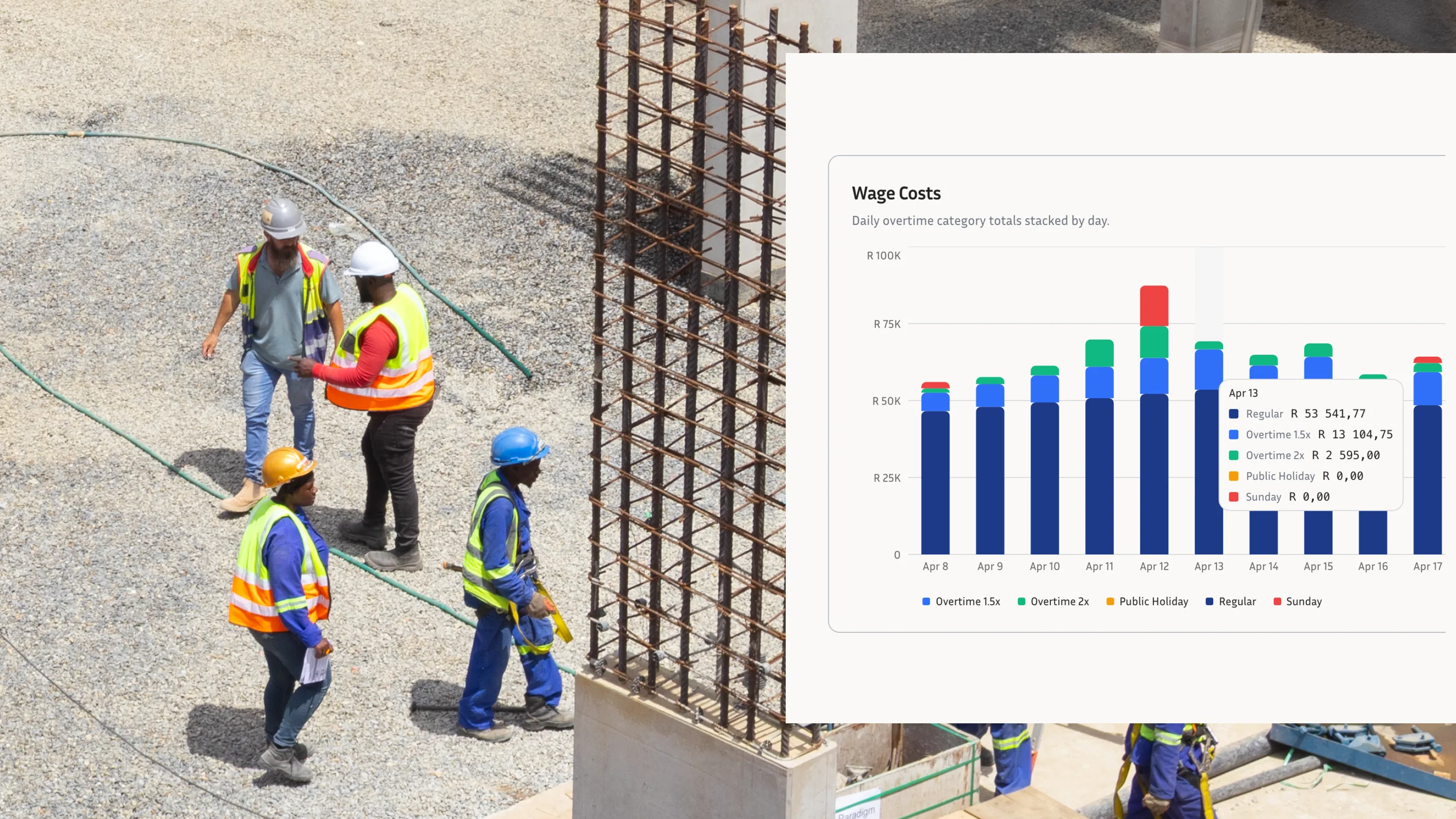
The national minimum wage increased to R30.23 per hour from March 2026, and BCEA overtime rates apply to every hour worked beyond contracted time. For a crew completing extended shifts on a fast-track infrastructure project, the actual labour cost per project can drift well above what the tender assumed. Without a system tracking hours, rates, and site allocation in real time, that drift is invisible until payroll closes.
Construction wages are not a fixed overhead. They shift week to week based on hours worked, site allocation, and when overtime thresholds trigger. Treating wages as a fixed input at bid time is where SMME construction payroll losses typically begin, and where smaller contractors quietly lose margin over the life of a contract.
Why Construction Bid Pricing Breaks Without Cost Data
Most SMME contractors price tenders from experience and memory. A site manager knows roughly what a civil crew costs per day. A director carries forward what the last similar job came in at. That accumulated knowledge has real value. But it ages quickly when wage inflation in construction shifts the baseline between the last project completed and the next bid submitted.
The practical result is defensive pricing: build in a contingency buffer large enough to cover uncertainty, then hope the number still wins on tender. On infrastructure contracts where several contractors compete directly, that buffer can price a smaller firm out. Strip the buffer to stay competitive, and the firm absorbs the loss when actual costs exceed the bid.
The more damaging scenario: the firm wins the contract at a tight price, and three weeks into a six-week project discovers labour costs are running above the tender rate. That is not a compliance failure. It is a data failure, and it is entirely preventable.
How Project-Based Time Tracking Feeds Accurate Tenders
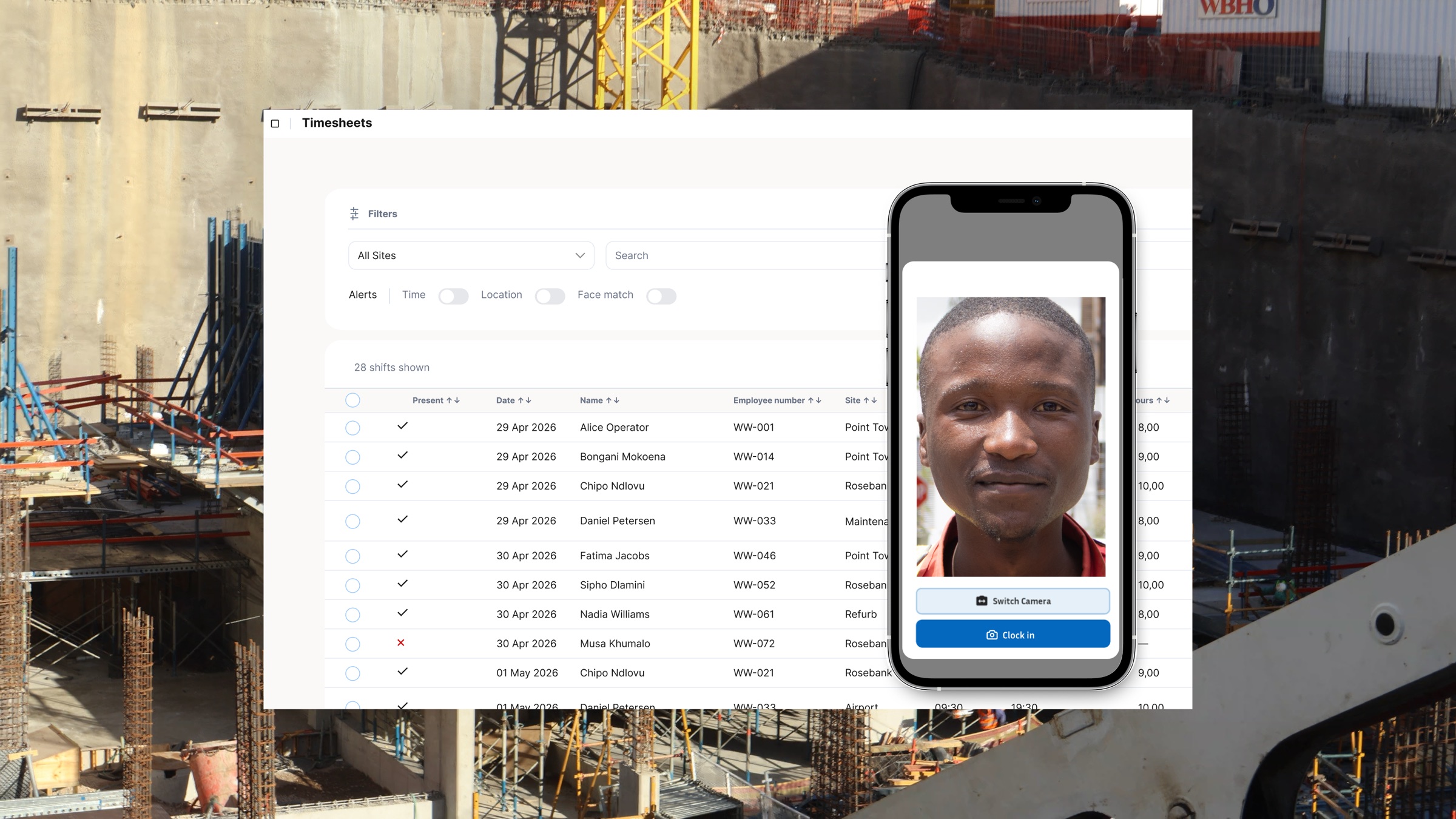
When an employee clocking system records hours by site, you get a verifiable labour cost figure for each project at any point in its life. That figure comes from actual clock-in and clock-out data, mapped to each worker's hourly rate, overtime rules, and pay category. It is not a back-of-envelope estimate.
Workweek's multi-site management feature captures this at the site level. Every clock event is tagged to a specific location, and the Site Breakdown report shows hours, wages, and wage percentage allocated to each site. That output feeds directly into post-project cost analysis, and over time builds a library of real labour cost data that makes each subsequent tender more accurate.
The data also surfaces cost overruns before they compound. If a site is running higher-than-expected overtime in week two of a six-week project, a site manager can see it and act. For contractors running several active sites simultaneously, multi-site time tracking features make different crew compositions, productivity profiles, and overtime patterns visible and comparable across the whole operation.
Getting hours per project right starts with getting clock-ins right. Verified, geo-tagged time entries give you numbers you can build a bid around. Paper-based records do not.
Margin Visibility as a Competitive Tool
The contractors who will compete well on the infrastructure pipeline ahead are not necessarily the largest firms. They are the firms that know their real cost to deliver.
Monique Boucher, Safety Officer at Supreme Scaffolding, described the shift directly after moving to digital time and attendance software: "Now, with accurate timesheets, we can get a full picture of how much sites, and labour, are actually costing us."
That visibility changes how bids get built. Past labour cost per project becomes the foundation for the next tender, rather than a figure that exists only in someone's memory. Payroll accuracy feeds pricing confidence, and pricing confidence protects margins.
SMME contractors who know their labour numbers going in can sharpen their bids, reduce contingency buffers, and compete on actual cost rather than guesswork. With 63 PPP projects in development and Cape Town's infrastructure commitment accelerating, the margin between winning and breaking even will come down to who has the data and who is still estimating.
Book a demo with Workweek to see how project-based time tracking turns real site hours into construction bid pricing you can stand behind.