The Department of Employment and Labour published the Labour Law Amendment Bill, 2025 and the Labour Relations Amendment Bill, 2025 for public comment in February 2026. These are proposed changes, not final law, and they may still change through the parliamentary process. For construction companies managing multi-site crews, processing weekly payroll, and relying on fixed-term or labour broker arrangements, three themes are worth preparing for now: higher severance exposure, broader leave entitlements, and a tighter test for who qualifies as an employee.
Change One: Severance Pay Could Double
The Basic Conditions of Employment Act currently sets statutory severance pay at one week's remuneration per completed year of service for dismissals based on operational requirements. The proposed amendment would double that minimum to two weeks' remuneration per completed year of continuous service. That is a direct cost change for restructuring, retrenchment, and project close-out planning.
For a civil contractor with a crew of 40, several of whom have been on rolling fixed-term contracts for three or four years, the cost of ending a project or restructuring a team could rise materially if the proposal is enacted. Payroll teams used to quick severance calculations will need to model the two-week minimum before any operational-requirements dismissal.
The record-keeping risk is where many employers get caught. If your records do not separate and track employment dates, remuneration history, contract status, and project movements clearly, you risk underpaying and facing a CCMA dispute, or overpaying because your data is incomplete. Accurate, complete employment history is the only foundation on which severance can be applied correctly.
Change Two: Expanded Leave Entitlements and What They Cost Per Crew
The second change addresses leave. The proposed Bill extends parental leave provisions and introduces new categories of family responsibility leave that exceed what the BCEA currently requires. Primary caregiving parents would receive longer paid leave, secondary caregivers would gain additional unpaid leave, and new entitlements would apply to workers dealing with specific family circumstances.
The intent behind these provisions is sound. Workers deserve time for family without fear of losing income or their position. The operational challenge for construction businesses is not the principle; it is the administration. Tracking expanded leave entitlements accurately across a workforce that moves between projects, works across multiple sites, and includes a mix of permanent and fixed-term staff is genuinely difficult without the right systems in place.
A site manager running 60 people across two locations cannot manage leave manually without errors. Paper leave forms get lost on sites. Messages sent over WhatsApp are not a leave management system. Spreadsheets break when multiple people need to update them, or when someone forgets. The Bill introduces new leave categories that require a clear, auditable record for every worker, and those records need to hold up under scrutiny.
Construction businesses that already find keeping leave records accurate and compliant a strain under the current rules will find the expanded entitlements harder to handle. A proper leave tracker that logs accruals, approvals, and balances automatically becomes essential rather than optional. The leave records you maintain today will be the same records that determine your liability when a worker claims unpaid leave or a labour inspector asks for proof of compliance.
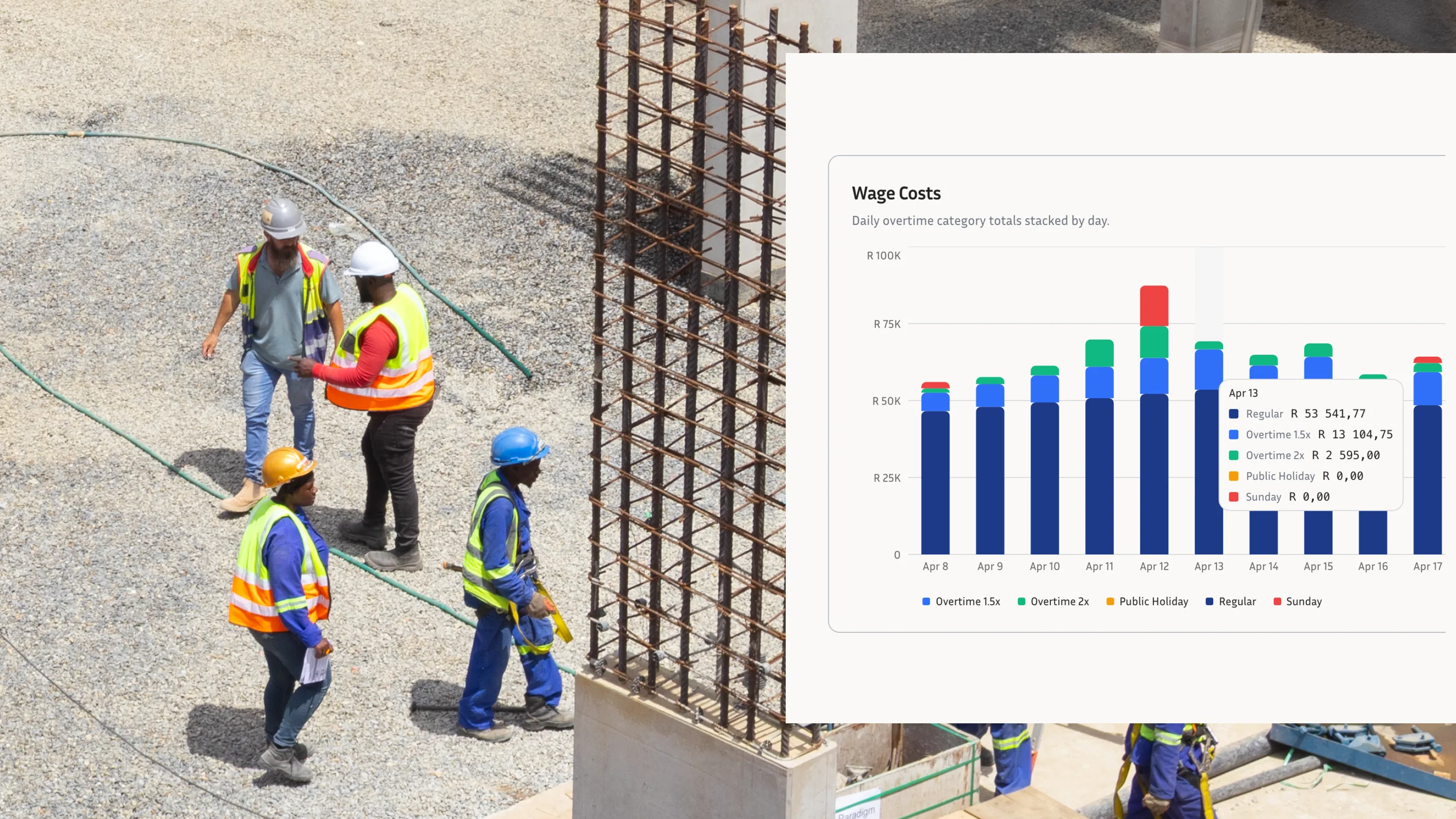
The overtime implications are also worth noting. When workers take leave during periods they would otherwise have worked overtime, the interaction between leave pay and the applicable overtime rate south africa introduces complexity into payroll calculations. Getting this wrong, in either direction, creates exposure.
Change Three: Employee Classification Gets Tighter
This is the provision that will affect construction and civil engineering businesses most directly. The proposed Bill strengthens the presumption of employment, building on Section 200A of the Labour Relations Act, and raises the bar for classifying a worker as an independent contractor rather than an employee.
Under the current framework, businesses can structure certain engagements to sit outside the employment relationship. The proposed Labour Relations Amendment Bill narrows that space by creating a presumption of employment unless the employer can prove the worker is genuinely independent, not controlled by the employer, not integrated into its organisation, and not performing work on the employer's terms.
For construction companies using labour brokers, subcontracting individual tradespeople, or engaging skilled workers on short-term project agreements, some of those arrangements will be reclassified. Reclassification triggers full BCEA entitlements, UIF contributions, and in some cases, retrospective leave and severance obligations.
The classification question is not new to labour law south africa. The CCMA and the Labour Court have been dealing with misclassification disputes for years. What changes with this proposal is that the presumption shifts more firmly toward employment for dependent contractors and other workers in the grey area. Businesses that have been relying on labels rather than the real working relationship will find that position harder to defend.
The practical step is to audit your current workforce structures before the Bill becomes law. Any worker who looks and operates like an employee on the ground but is contracted as an independent needs a legal review now.
Why Your Time and Payroll Records Are the Real Issue
All three changes in the proposed Bill share a common requirement: they depend entirely on accurate, complete records. Severance calculations require full remuneration history. Leave compliance requires accurate accrual and usage records. Classification disputes require evidence of how the working relationship actually operated, including hours worked, supervision arrangements, tool supply, and payment patterns.
Paper timesheets and informal check-ins do not hold up when your records are challenged. A verified clocking system that captures attendance accurately for every worker, tied to a payroll record that covers all remuneration components, is what protects your business when a dispute reaches the CCMA.
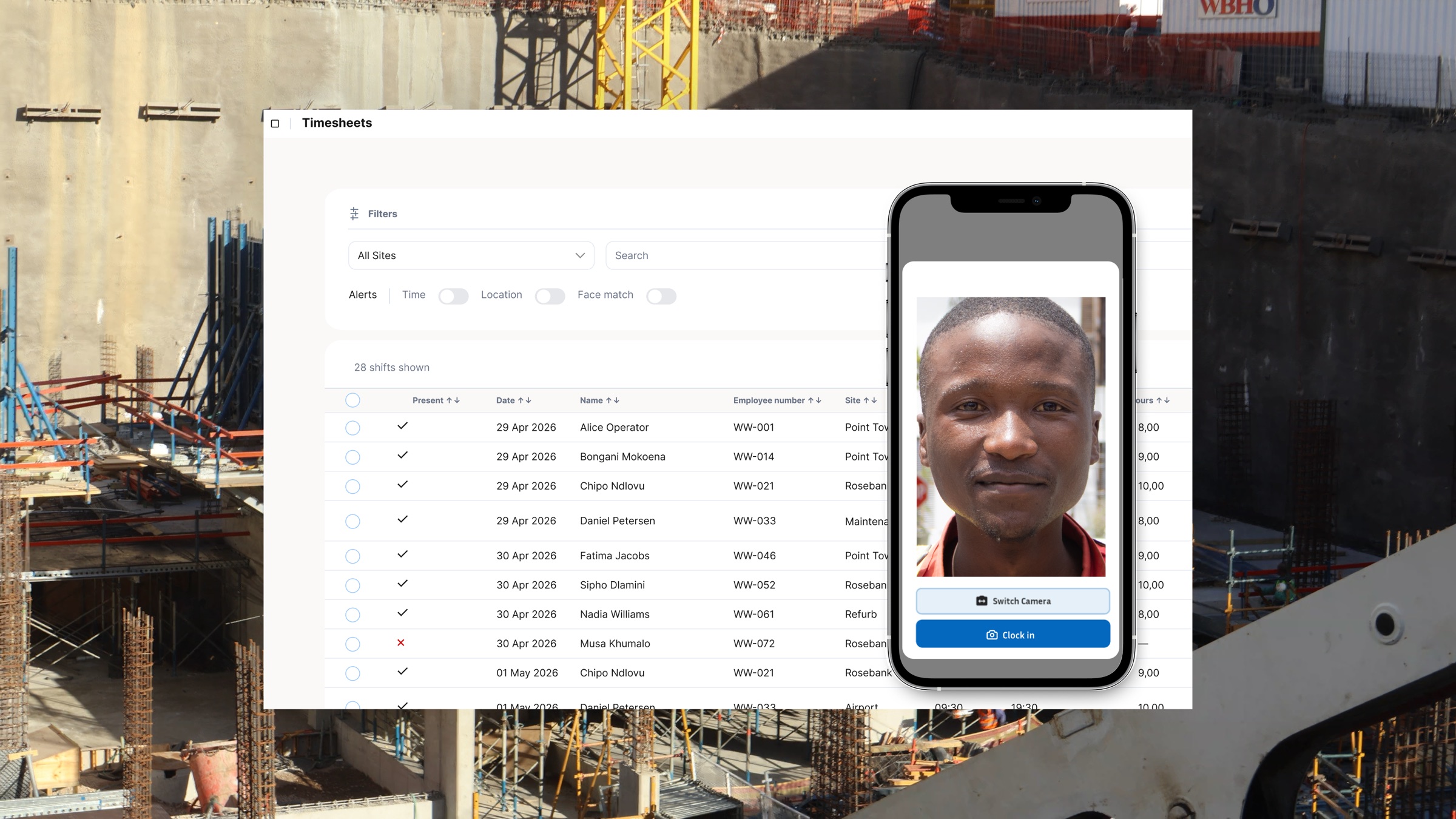
Facial recognition and biometric clocking address the buddy punching problem that costs construction businesses hours every week, and they give you a timestamped, verifiable record for every shift. When a worker claims they worked more hours than your records show, your data carries weight. When an inspector asks for attendance records, you can produce them on the same day.
For businesses running projects across multiple locations, multi-site workforce management is also critical. If a worker clocks in at a Johannesburg site and a Pretoria site in the same week, your overtime calculator needs to aggregate those hours at the employee level, not just at the site level. The BCEA does not care how your project structure is organised; it cares about total hours worked. An attendance management system that keeps payroll-ready records for South African teams helps keep BCEA overtime calculations consistent, without manual re-entry and without the errors that come with it.
HR software south africa that handles leave accruals, overtime calculations, and remuneration records in one place is the kind of infrastructure this regulatory environment demands. The businesses that will handle this transition smoothly are the ones that already have clean, complete data.
A Prep Checklist You Can Action Now
The Bill has not yet been signed into law, but the provisions are clear enough to start preparing. Work through the following before commencement:
- Audit your contractor and labour broker arrangements. Identify which workers are likely to meet the proposed presumption of employment criteria. Get legal advice on those specific relationships before any final amendments take effect.
- Review your remuneration records. Confirm that your payroll system captures every allowance and payment component, not only basic wages. If it does not, fix the records now so your severance calculations will be correct from the first day the new formula applies.
- Map your current leave entitlements against the expanded requirements. Understand what your workers currently accrue and what the new categories will add. Your leave management system needs to handle those categories without manual workarounds.
- Check how your time and attendance software aggregates hours. If you run crews across multiple sites, confirm that your system totals hours at the employee level. Your bcea overtime exposure depends on that aggregation being accurate.
- Verify your clocking setup. A timesheet app or biometric clocking system that produces verified, timestamped records for every worker is your primary defence in any dispute. If you are still managing time on paper or in spreadsheets, change that before the Bill takes effect.
- Brief your site managers. The people running your crews need to understand what the classification changes mean in practice, and what they can and cannot say to workers about their employment status.
Get Your Records Ready Before the Law Changes
The Labour Law Amendment Bill 2026 rewards businesses that already have accurate data. Clean payroll records, verified attendance data, and a proper leave tracker turn these regulatory changes into administrative updates. Incomplete records turn them into liability.
WorkWeek gives construction and labour-intensive businesses across South Africa the tools to track attendance accurately, manage leave across multiple sites, and produce the payroll records that compliance requires. If you want to see how it works in practice, explore what WorkWeek does or speak to the sales team to get your systems ready before the Bill takes effect.