The overtime agreement lands in the new-starter paperwork, gets signed on day one, and gets forgotten. Site managers move on to the next problem, workers move on to the job at hand, and the agreement sits in a folder. If it was concluded when employment started or during the worker's first three months, it lapses after one year. For construction businesses, the gap between a lapsed agreement and a CCMA dispute is where the real financial exposure lives.
What Section 10 of the BCEA Actually Says
Section 10 of the Basic Conditions of Employment Act permits overtime only in accordance with an agreement and only within defined limits. Without an overtime agreement in place, an employer cannot lawfully require workers below the earnings threshold to work beyond their contracted ordinary hours. The BCEA caps the overtime the agreement can authorise at no more than three hours on any given day and no more than ten hours in any single week.
The part construction businesses most commonly miss is the timing rule. Section 10(5) says an overtime agreement concluded when the employee starts work, or during the first three months of employment, lapses after one year. The Act does not say every open-ended overtime agreement automatically expires after 12 months, so payroll teams should review when each agreement was concluded before deciding whether it has lapsed.
The written requirement exists for a specific reason: it creates a documented record of mutual consent that both parties and any adjudicating commissioner can verify. Verbal agreements and informal understandings do not satisfy the section, and long-standing practice should not be treated as a substitute for a signed document.
The 12-Month Expiry That Sites Routinely Miss
Construction projects routinely run longer than 12 months. A workforce that was properly covered during onboarding can be working under a lapsed new-starter agreement in year two, with nobody on site aware that the Section 10(5) one-year period has passed. The site manager who scheduled overtime in month fourteen may have no valid instrument to point to, even if the original paperwork was correctly completed.
The situation compounds on sites that source labour casually or through labour brokers. Casual workers and fixed-term contract staff are often brought on with generic onboarding paperwork, signed quickly during induction, and filed without any tracking. Where that agreement falls within Section 10(5), no system flags the one-year lapse date, no reminder fires, and the site carries on as before.
A pattern of overtime work does not safely extend the legal life of a written agreement. The agreement is either in force at the time the overtime was worked, or it is not. Payroll teams should treat the expiry date as a hard compliance control, not an admin note.
What Lapses Look Like in Practice
The three worker types that generate the most BCEA overtime disputes on construction sites are casual labourers on month-to-month arrangements, apprentices on fixed-term contracts, and leading hands who work extended hours as a matter of routine.
A casual labourer signs an overtime agreement in February 2024 as part of site induction, covering three hours of overtime per day for a 12-month period. By March 2025, the agreement has lapsed, but the labourer continues working 10-hour days through April and May. When a dispute arises over other conditions, the employee's representative points to the expired agreement: all overtime after February 2025 was unauthorised, and the employer has no renewed document to produce.
Apprentices are a frequent source of exactly this gap. An apprenticeship agreement governs the trade training arrangement, but it does not substitute for a BCEA overtime agreement. A second-year apprentice working extended hours on a concrete pour is covered by Section 10 for those extra hours only if a valid, current overtime agreement is in place for them specifically.
Leading hands present a different risk profile. Because they coordinate other workers and often start early or finish late, their actual hours frequently exceed what any written document reflects. When an overtime agreement lapses for a leading hand working 50-hour weeks, the back-calculation risk starts from the date the agreement expired.
When the Agreement Lapses, What Gets Recalculated?
Once a commissioner or court confirms that an overtime agreement was not in force, the default BCEA position applies to the hours worked during the lapse period. Overtime worked without a valid agreement is still overtime worked, and the employer may owe the applicable rate for every hour beyond the employee's ordinary contracted hours.
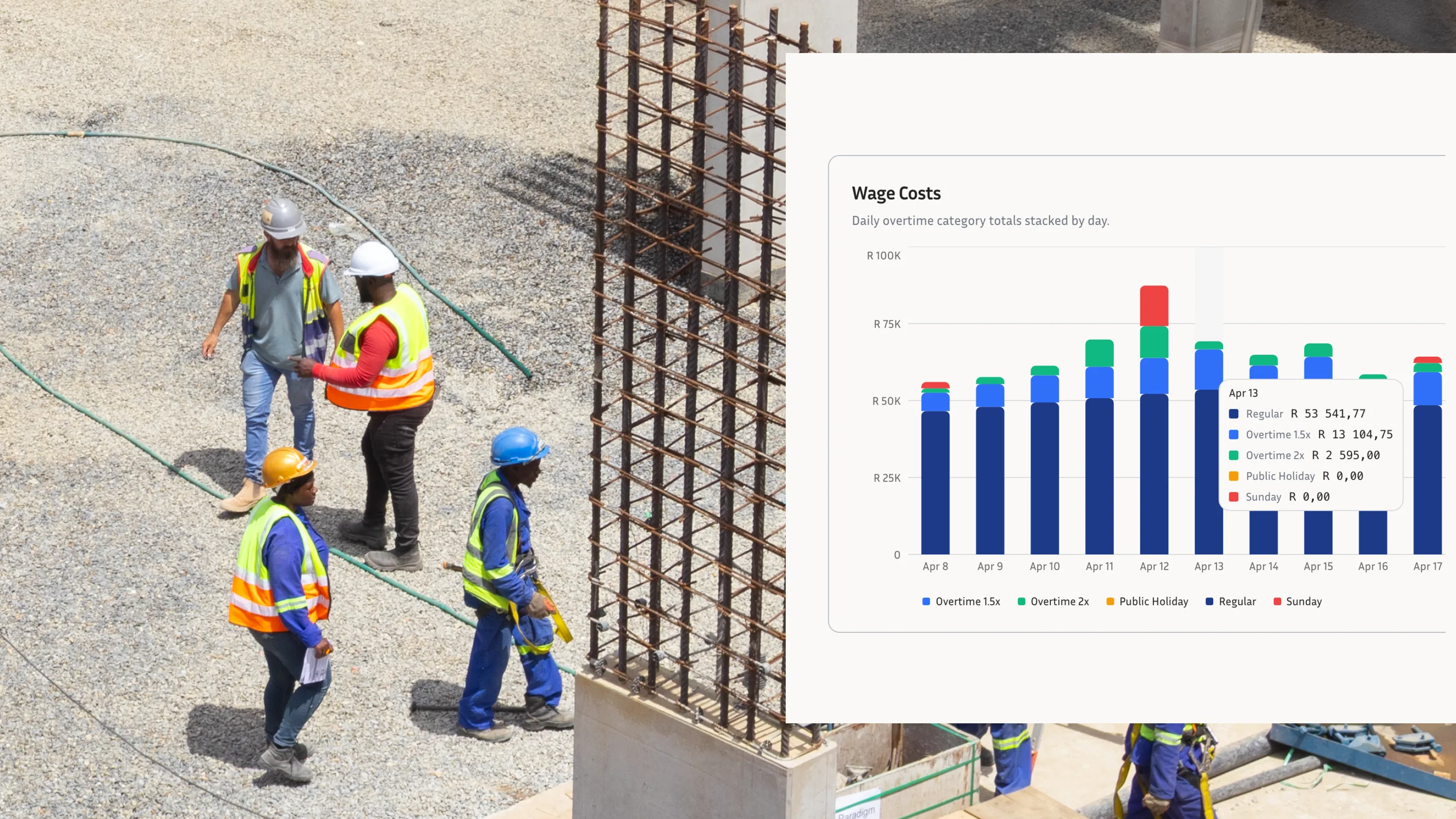
For workers at or below the current BCEA earnings threshold of R269,600.90 per year, the ordinary overtime rate is 1.5 times the ordinary hourly rate. If a worker earned R6,500 per month on a standard 45-hour week, their ordinary hourly rate is approximately R33.33, making every overtime hour owed at about R50. Across a crew of ten workers over three months, the recalculation becomes material quickly.
The employer may also face enforcement action from the Department of Employment and Labour, depending on the facts and the affected employees. The BCEA earnings threshold and what it means for overtime obligations sets out which workers fall within that exposure under the current 2026 figures.
For a step-by-step breakdown of how the 1.5x and Sunday or public-holiday multipliers apply to different worker categories, the BCEA overtime calculator guide covers how to derive the correct hourly rate and apply it to each scenario.
A Practical Audit to Find Expired Agreements Before a Dispute Does
The audit is straightforward and takes less than a day to run across most sites. Pull every overtime agreement currently on file. For each one, check three things: the date it was signed, whether it was concluded when employment started or during the first three months, and whether one year has passed since that date. If the agreement falls into that Section 10(5) window, treat it as lapsed after one year and renew it before scheduling more overtime.
For agreements that have expired, issue a new written agreement, have it signed by both parties before scheduling any further overtime, and file it with a clear expiry date recorded on the document. Critically, calendar the renewal date immediately so the next expiry does not sneak past unnoticed. A simple shared calendar reminder set 11 months forward is enough to prevent the most common version of this problem.
Agreements that were never collected in the first place are the harder problem. Where you cannot locate signed agreements for current workers who have been on site for more than a year and have been working overtime, take legal advice before the next payroll is processed. Gaps in documentation create the same legal exposure as expired agreements.
- Pull all overtime agreements currently on file and date-check each one.
- Flag agreements signed at commencement or during the first three months as Section 10(5) agreements.
- Flag any Section 10(5) agreement that is more than 11 months old for immediate renewal.
- Identify current workers on site for more than 12 months with no agreement on file.
- Record renewal dates in a shared calendar with a 30-day advance alert.
- For workers with lapsed agreements, calculate potential back-overtime exposure before any dispute is filed.
How Accurate Time Records Change the Shape of a Dispute
A CCMA dispute over unauthorised overtime is not only a legal question about the agreement. It is also a factual question about hours actually worked. If an employer's records are complete and verified, the dispute is at least bounded, because you know what was worked and you can calculate what is owed. If records are incomplete, disputed, or based on unverified manual entry, the commissioner is more likely to accept the worker's account of hours worked over the employer's version.
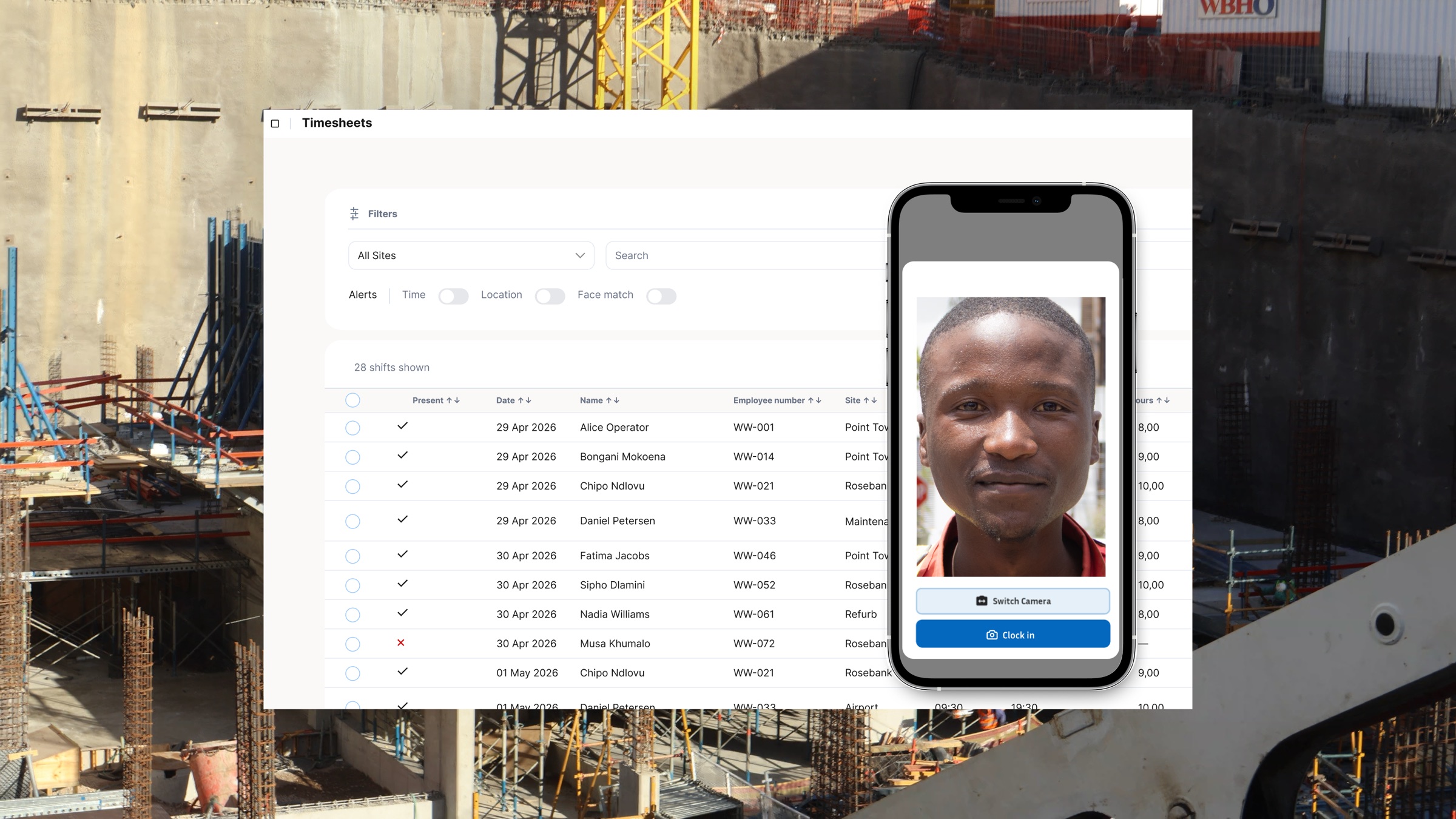
This is where a reliable employee clocking system changes the outcome, not just the process. Verified clock-in and clock-out records, tied to a specific individual at a confirmed time and location, give employers accurate data to work from when an agreement lapses. Those records tell you exactly how many hours fall outside the agreement period and let you calculate the exposure before any dispute is filed.
Time records are also the employer's evidence when a worker's account of hours is exaggerated. Employers running on paper timesheets or unverified manual entry are at a structural disadvantage in any proceeding about hours, because their data is easily challenged.
Expired overtime agreements create a specific compliance problem, but poor time records turn that problem into a blank cheque. Accurate records cap your exposure. Inaccurate records leave it open.
Expired overtime agreements are a compliance gap that most construction businesses do not discover until a CCMA dispute surfaces one. The fix is not complicated: an annual renewal cycle, a calendar alert, and a reliable record of every hour worked so that if a dispute lands, you are working from facts rather than memory. To see how WorkWeek captures verified, timestamped attendance records that support this kind of compliance process on construction sites, book a demo and speak to someone who works directly with South African construction operations.