The proposed Labour Law Amendment Bill would directly affect construction businesses in South Africa that rely on day-hire, shift-based, or on-call workers. The practical message is simple: loose casual arrangements are getting harder to defend. Construction businesses that have relied on verbal agreements or generic templates now have a specific compliance task to prepare for: put the expected minimum hours in writing and make sure the time records support what the contract says.
What the Bill Would Require on Guaranteed Hours
The core obligation is straightforward: if you engage casual, shift-based, or on-call workers, your written contracts should state the minimum hours that worker can expect to be called for. The proposal does not mean every casual worker must be guaranteed a full working week. It means the contract needs a real floor that reflects the genuine expectation of work on offer.
Vague language like "hours as required" or "shifts as agreed" is the kind of wording that creates risk. The hours column in your casual agreement needs a number. If you genuinely cannot commit to more than two shifts per week for a day-hire labourer, write two shifts per week and define the shift length.
The proposed change also interacts with existing labour law South Africa provisions around casual employment status. Workers engaged for more than three months under a casual arrangement already carry reclassification risk under current LRA rules, and clearer guaranteed hours would layer on top of that risk rather than replacing it.
Why Vague Contracts Create CCMA Exposure Right Now
The CCMA regularly adjudicates disputes where a casual worker was called for months on a regular schedule, but the contract said nothing specific about hours or continuity. In many of those cases, the absence of written terms works against the employer. An arbitrator filling a gap in the contract tends to fill it in the worker's favour.
A worker can argue that they had a legitimate expectation of work based on prior conduct, and that expectation should have been reflected in writing. If your contract has no hours clause and you stopped calling that worker after three months, you have a documentation problem. The worker can show up with phone records, WhatsApp messages, and payslips that together tell a story your contract cannot counter.
The cost of getting this wrong is not just the CCMA payout. It is the time your site manager and HR contact spend preparing for arbitration, the legal fees if you use outside counsel, and the precedent it sets for other workers on your books. Getting the contracts ready now is the lower-cost option.
Three Construction Scenarios: How to Rewrite the Agreement
Scenario 1: Day-hire labourers. A civils contractor hires labourers daily from a local pool. Some individuals show up four days per week, others once or twice, depending on project demand. The current contract is a site register entry and a wage rate. The rewrite should acknowledge the variable nature of the work while still stating a guaranteed minimum, such as two shifts per week during active project phases, with the shift length clearly defined.
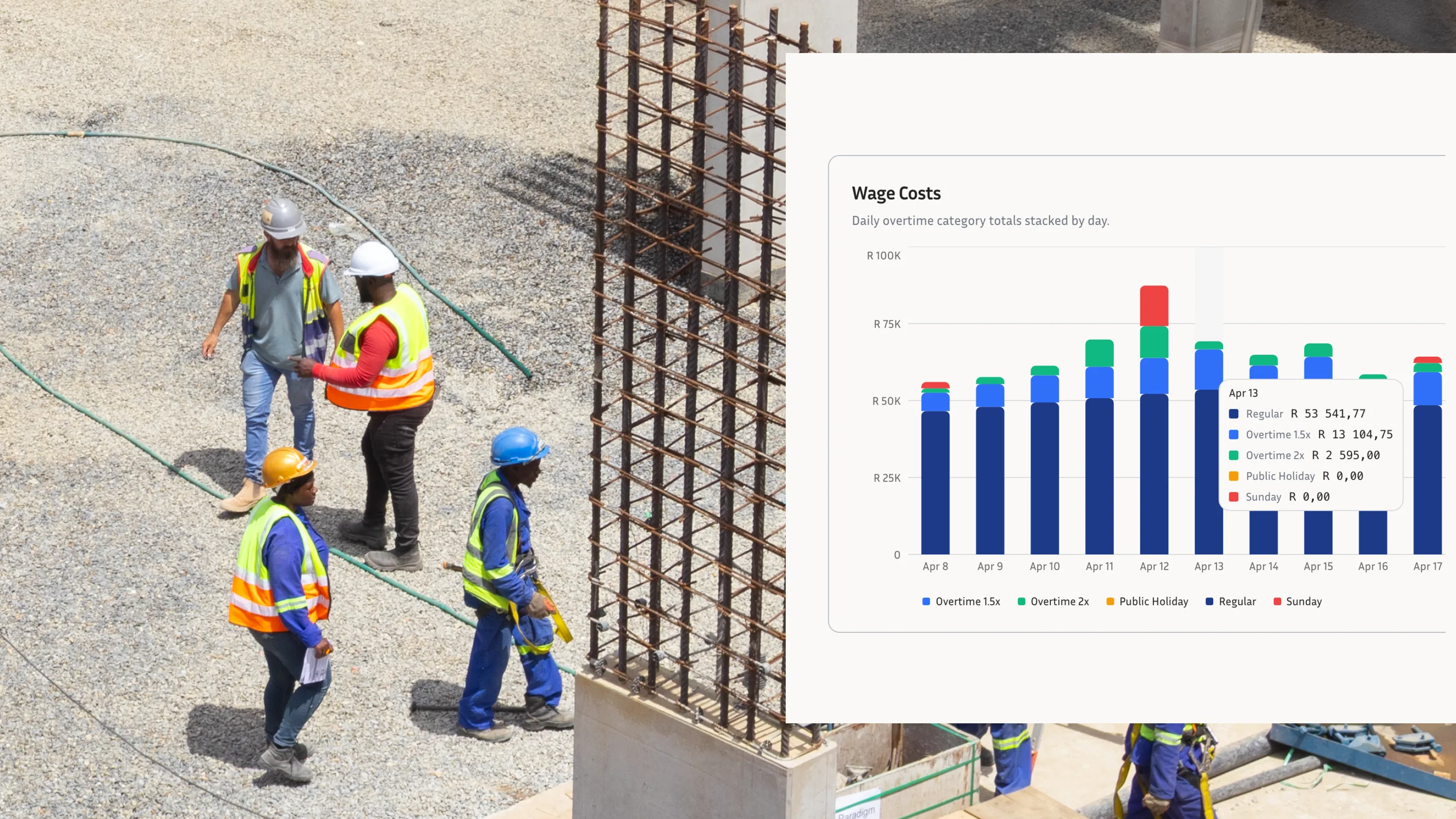
Scenario 2: Leading hands on a shift rotation. A building contractor uses leading hands on a rotating weekend and night shift basis. Their contracts currently describe them as independent contractors engaged per shift. The hours rewrite needs to specify the guaranteed shifts per month, confirm the overtime rate, and ensure any hours above the guaranteed floor trigger the correct overtime rate South Africa calculation at 1.5x where the BCEA applies.
Scenario 3: Apprentices on variable schedules. An electrical subcontractor has apprentices whose hours vary depending on site demand and supervision. The apprenticeship contract is already regulated under SETA requirements, but the hours provisions are often left vague. The rewrite should state the minimum guaranteed hours per week, include explicit reference to applicable BCEA overtime provisions, and document who bears responsibility when the worker cannot be placed on a site in a given week.
A Practical Contract Template Outline for Casual Construction Workers
- Worker details: full name, ID number, role, and site assignment.
- Engagement type: casual, fixed-term, or on-call, with an explicit statement of the nature of the arrangement.
- Guaranteed minimum hours: a specific number of hours or shifts per week or per month, not a range or vague phrase.
- Hourly or shift rate: including the applicable rate above the National Minimum Wage and the overtime rate that applies for hours beyond ordinary time.
- Overtime terms: a signed overtime agreement where applicable, noting that BCEA overtime agreements can expire after 12 months.
- Leave entitlements: annual leave accrual and sick leave provisions that match the worker category.
- Termination terms: the notice period and any project-based termination trigger.
- Signatures: both parties, dated, with a copy provided to the worker.
This is not a full employment contract template. It is the part of the document that needs to stop being vague. A worker who receives it has been informed of their rights. A worker who does not will arrive at arbitration with a stronger case than you will.
How Your Time Tracking Records Support the Contract Position
A rewritten contract does its job at the point of dispute. What determines whether you win or lose that dispute is the evidence you can produce about actual hours worked.
CCMA arbitrators want records. Not payslips alone, and not a supervisor's verbal account of who was on site. They want attendance logs, clock-in and clock-out records, and payroll data that matches those records. If your records show consistent hours over multiple months, they either confirm that your guaranteed hours clause was accurate, or they reveal a discrepancy that becomes the worker's argument.
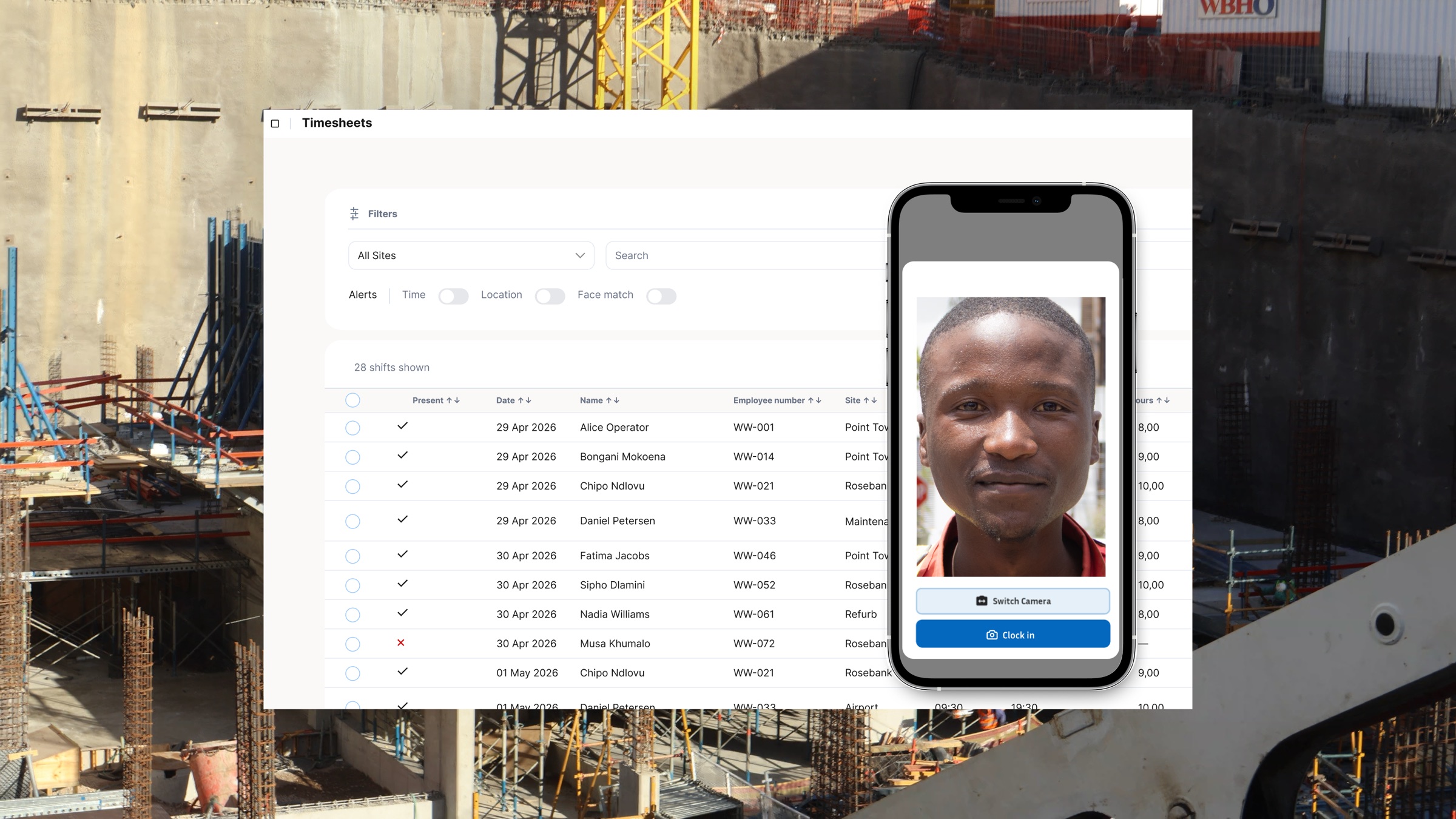
A clocking system for employees that records time at the gate against verified identity is your primary defence. Facial recognition clocking and GPS-verified check-ins produce timestamped records that cannot be casually rewritten after the fact. That matters when a worker claims they worked 45 hours per week for six months and your contract only guaranteed 20.
Workforce management software that links clocking data to payroll exports gives you the complete record in one place: who worked, when, for how long, and what they were paid. When that record matches your contract's guaranteed hours clause, you are in a defensible position. When it does not, you need to know that before the worker does.
The contractors who use this window to rewrite their casual agreements, install reliable clocking records, and align their payroll documentation will face the proposed requirements with evidence already in place. The ones who wait will be starting from scratch under a tighter legal framework, with workers who may already have a paper trail of their own.
Rewriting a casual contract takes an afternoon with a labour attorney and your existing agreements in front of you. Setting up a verified clocking system can happen quickly across most sites. The groundwork is not complicated. See how WorkWeek handles multi-site time tracking and payroll compliance before the compliance pressure arrives.