Construction businesses carry more employment paperwork than many teams realise. Fixed-term contracts get renewed, medical fitness certificates expire, induction records accumulate, and workers move between projects before the filing catches up. When those records are incomplete, out of date, or impossible to retrieve, the compliance risk lands directly on the employer.
This is not administrative housekeeping. It affects dismissals, fixed-term renewals, payroll disputes, safety investigations, and Department of Employment and Labour inspections. If you cannot produce the right record when asked, the fact that the work happened correctly on site often stops mattering.
Short-Term Contracts Are Not a Documentation Shortcut
Many construction businesses treat fixed-term employment as lighter than permanent employment because the relationship has an end date. That assumption creates risk. Section 198B of the Labour Relations Act places limits on fixed-term contracts that run beyond three months unless the work is genuinely temporary in nature or another justifiable reason applies.
That means every renewal needs its own paper trail: the operational reason, the project or phase the contract is tied to, the start date, the end date, and the signed agreement itself. Without that record, repeated renewals can become evidence against the employer in a CCMA dispute rather than protection for the business.
Short-term workers also move between sites regularly. If the contract, ID details, induction records, and supporting paperwork are trapped in one site office or scattered across email threads, the next manager inherits a compliance gap they may not even know exists.
Medical Documentation Expires
Construction is a high-risk environment, and some roles require current medical fitness or surveillance records before a worker should be on site. Those records are not once-off documents. They expire, they need renewal, and they need to be matched to the type of work the employee is actually performing.
If a worker returns after a break in service, changes project, or moves into a higher-risk role, the employer needs to know whether the fitness documentation still covers that work. An injury investigation becomes much harder to defend when you cannot show that the worker was medically cleared for the role they were doing at the time.
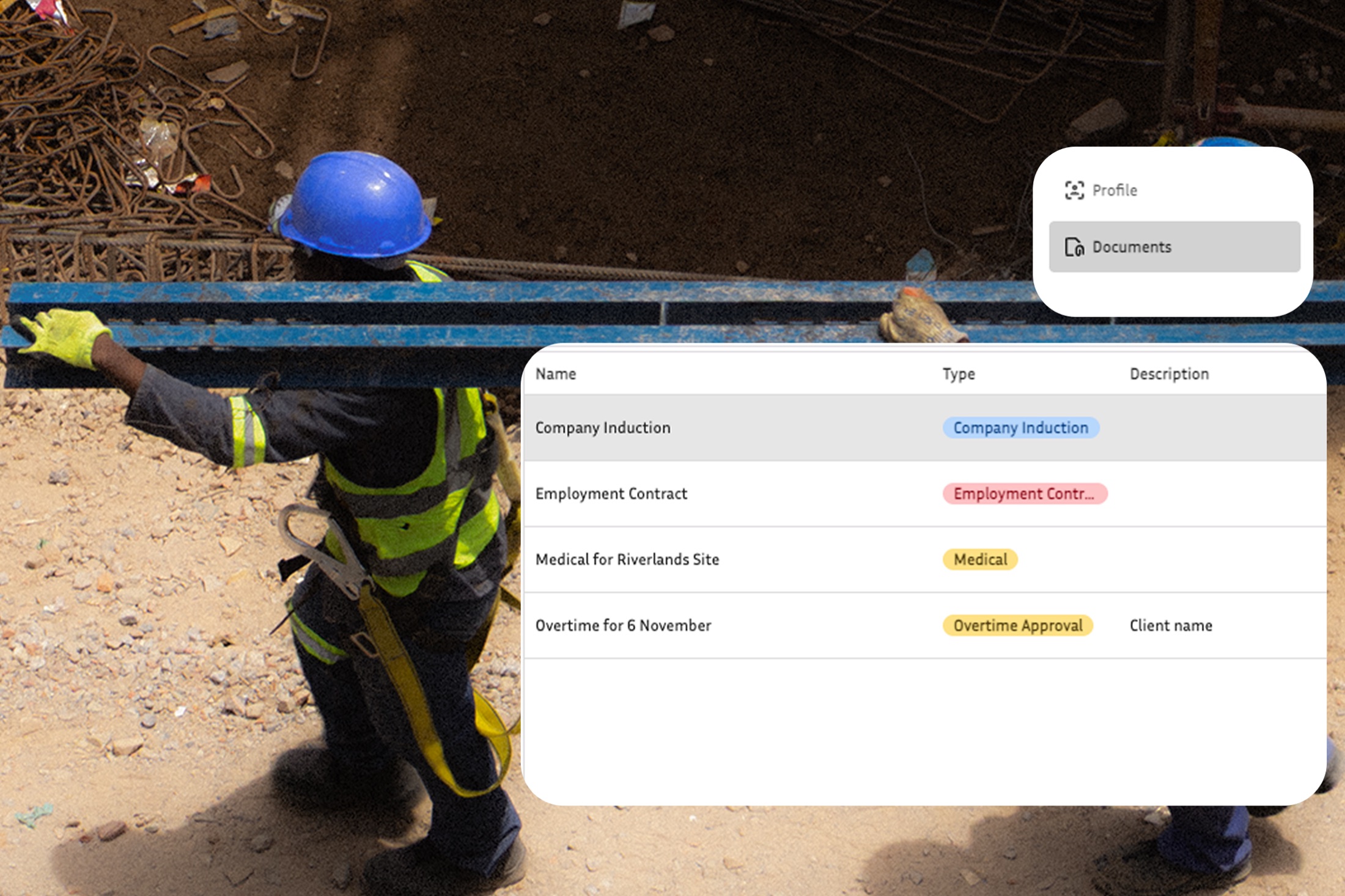
A system that stores medical records against each worker profile and flags expiry dates before they lapse is far safer than depending on memory, paper files, or one site administrator to remember renewal dates.
BCEA Record-Keeping Is Not Optional
The Basic Conditions of Employment Act requires employers to keep records of hours worked, remuneration paid, leave taken, and other employment particulars. Those records must be retained for three years after termination of employment. For construction businesses with high workforce turnover, that requirement becomes a real operational discipline rather than a background legal note.
A worker can leave a project and raise a dispute long after the final payslip was issued. If you cannot show the contract terms, the hours worked, the overtime paid, or the leave balance at termination, the business is defending itself without evidence. Paper timesheets and disconnected spreadsheets usually fail at exactly that moment.
The same applies to payroll. Overtime, leave accrual, deductions, and final balances all rely on records that can be retrieved quickly and explained clearly. A weak document trail turns routine payroll questions into formal disputes.
One System, All the Records
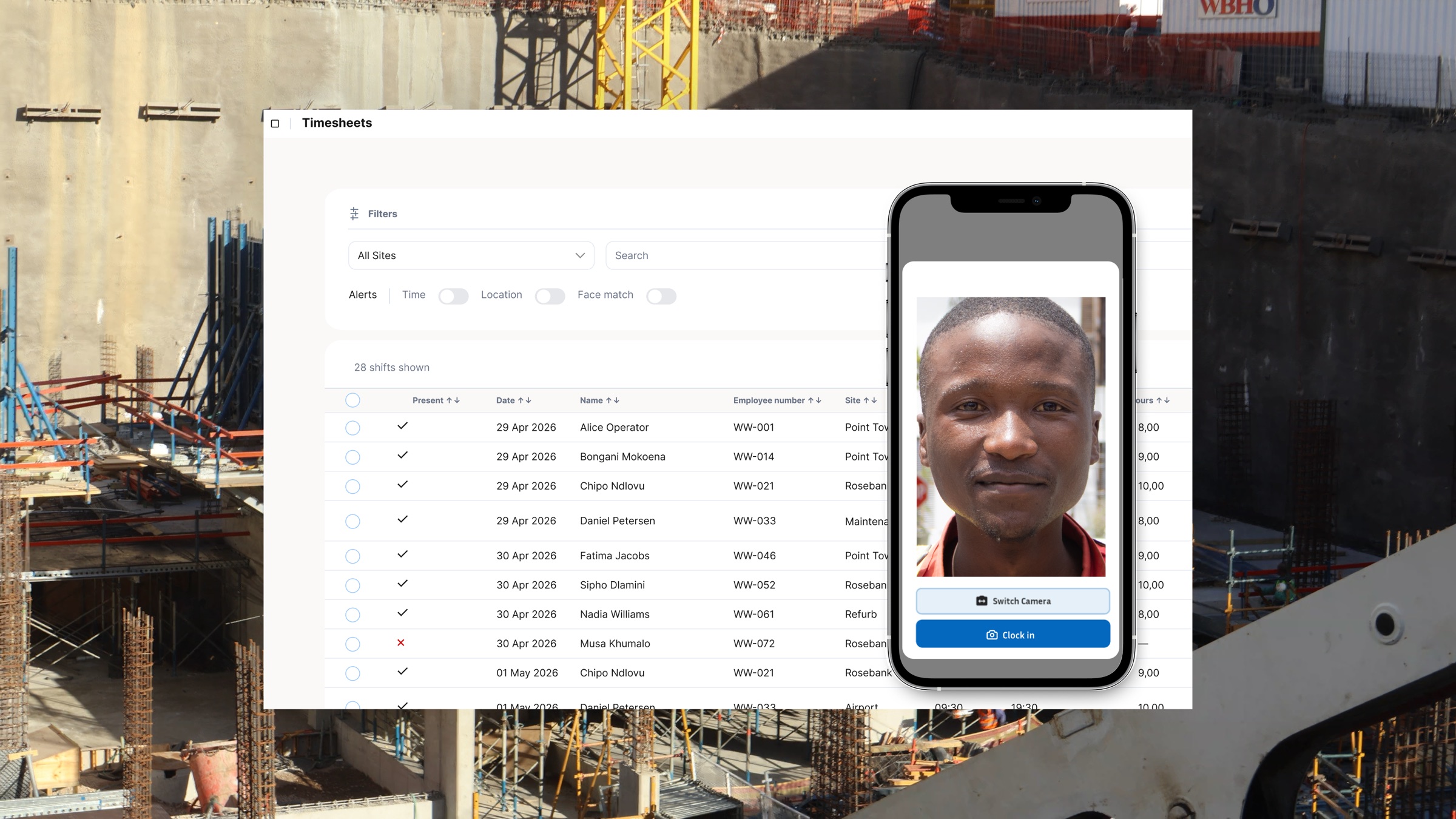
Construction businesses need one place to store contracts, employee details, medical documentation, attendance records, and leave balances. When the workforce moves between sites, the records must move with them digitally so each site manager and payroll operator works from the same source of truth.
That system works best when attendance data, contract records, and payroll records are tied to the same employee profile. Then a clock-in, a contract renewal, a medical expiry warning, and a leave balance all sit in one auditable trail instead of four different admin channels.
The businesses that handle inspections and disputes well are not the ones with the biggest admin teams. They are the ones that can retrieve the right record immediately. If your fixed-term contract files, medical certificates, and payroll records are still spread across paper folders and spreadsheets, that is the gap to fix first.