Payroll outsourcing appeals because it looks like someone else is carrying the burden. The provider handles submissions, deductions, and the processing cycle, and the business pays a fee for the service. But when the input data is weak or the turnaround is slow, the employer still owns the consequences.
That is why more businesses reconsider outsourced payroll and look at bringing it in-house. The trap is assuming the software choice is the hard part. In practice, the harder question is whether the business has accurate time and workforce data before the first in-house payroll run starts.
The Real Reason Outsourced Payroll Breaks Down
Most outsourced payroll failures start upstream. Supervisors capture hours manually, someone consolidates them into a spreadsheet, and the bureau processes whatever it receives. If the time record is wrong, the payroll is wrong, even if the software behind it is technically correct.
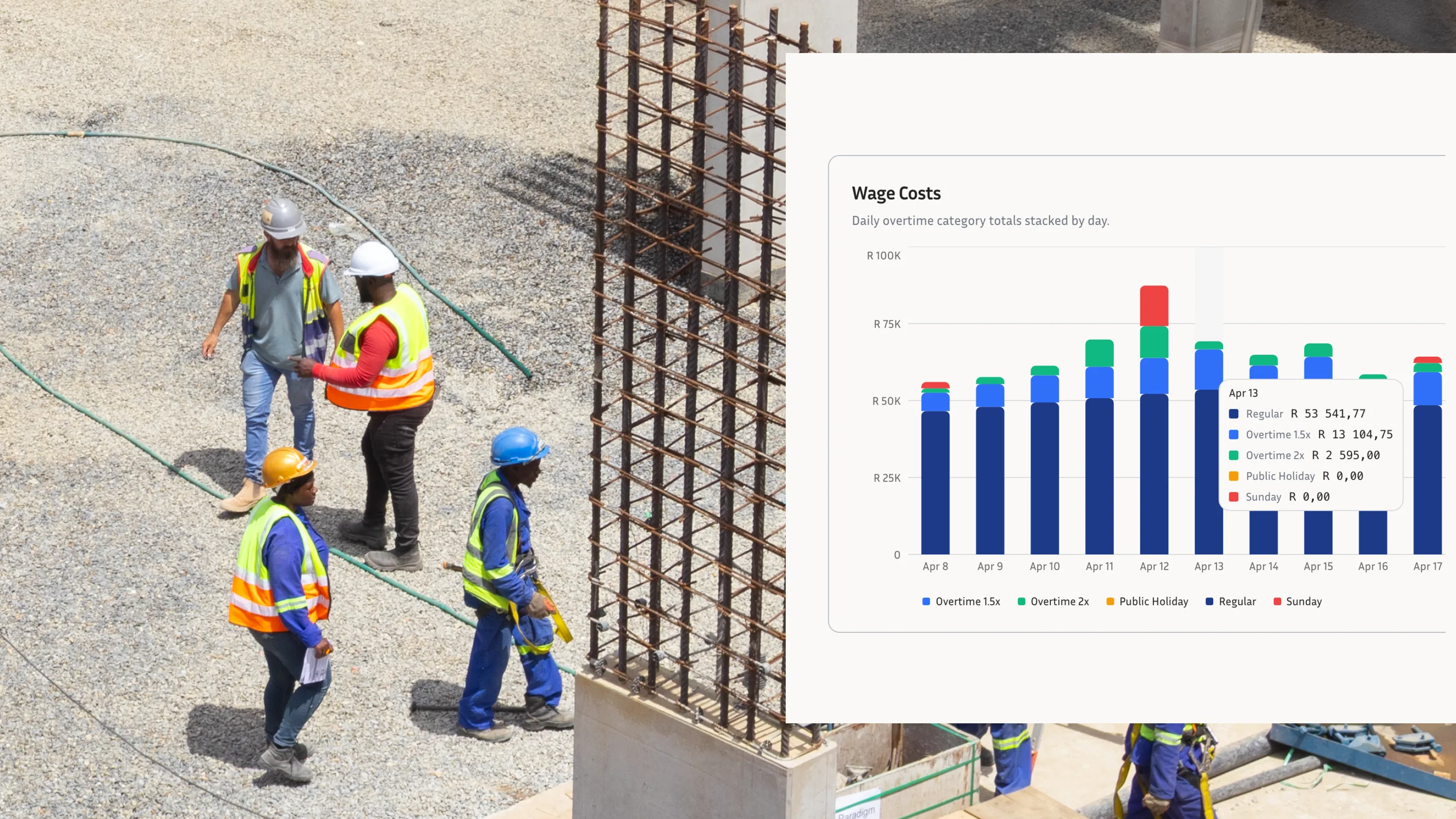
This becomes more serious once BCEA overtime, leave balances, and site-based attendance exceptions need to be handled properly. A bureau can process a file efficiently, but it cannot fix the quality of the inputs the business sends over at the end of the month.
What You Need Before the Payroll Software
Payroll software is a processing engine. It calculates based on the information it receives. Before a business brings payroll in-house, it needs a trustworthy source of attendance and time data: who worked, when they worked, where they worked, and how those hours relate to ordinary time, overtime, and leave.
That makes the employee clocking system the real foundation. If hours still depend on paper timesheets, memory-based corrections, or end-of-month reconciliations, moving payroll in-house simply relocates the same problem instead of solving it.
The Compliance Layer Cannot Be Added Later
Once payroll is in-house, the compliance burden becomes much more visible. The business needs correct overtime calculations, accurate leave balances, clean employee records, and a defensible audit trail behind every pay run. Those are not optional improvements for later. They need to be in place before go-live.
Overtime agreements, leave balances, ID and tax details, banking details, and employment records all need verification. If those basics are incomplete, the payroll team spends its first months correcting preventable errors instead of running a stable process.
Choose the Clocking System Before You Finalise the Payroll Process
Paper timesheets are usually the weakest option because they create manual reconciliation work every pay cycle. Traditional biometric hardware can work in a single fixed location, but it becomes harder to manage across multiple active sites or temporary project locations.
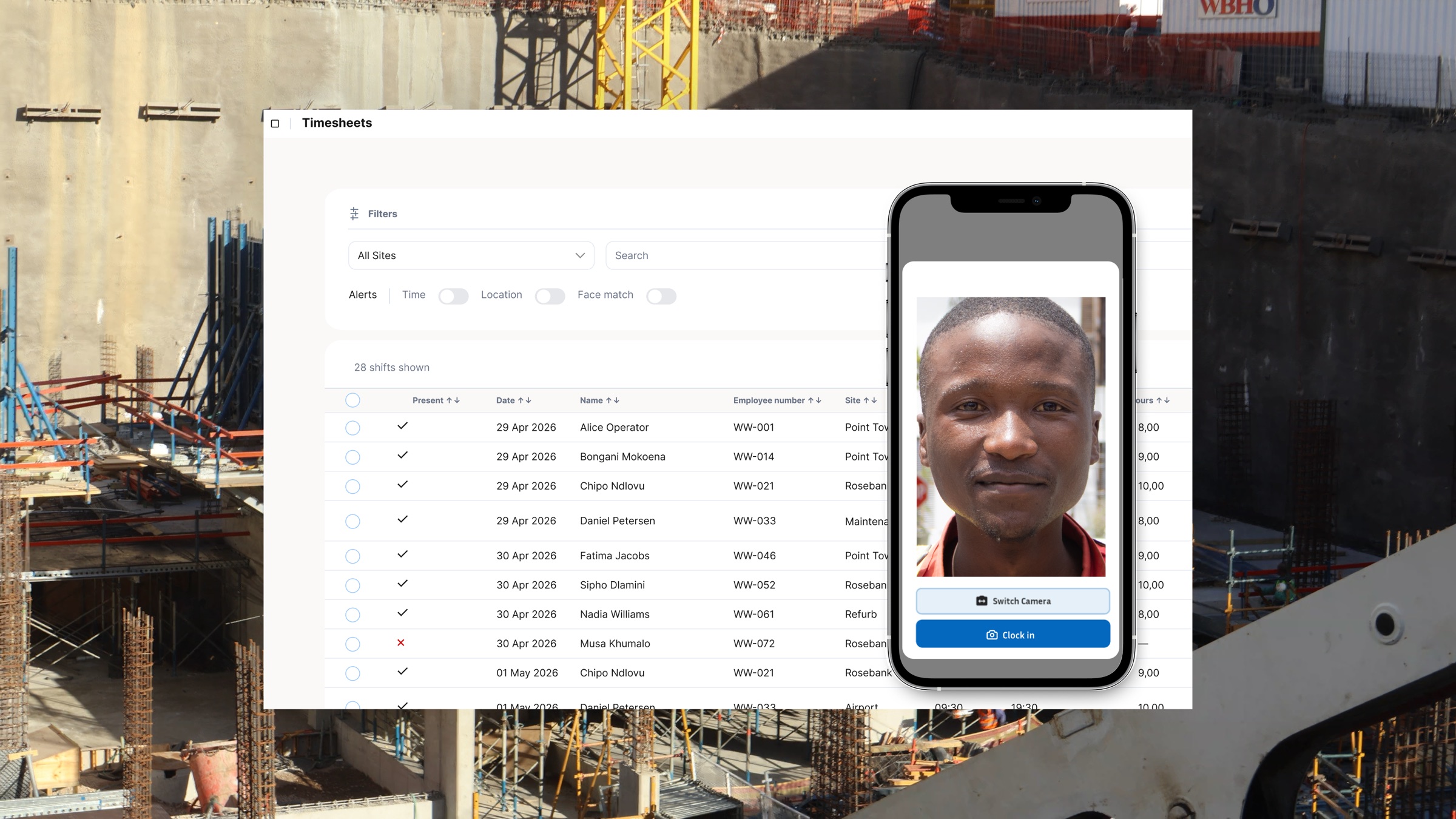
Mobile facial clocking or another flexible digital attendance setup often gives construction businesses a better operational fit. The employer gets verified attendance, site-level visibility, and exportable time data without relying on one fixed device in one place.
The right clocking system should also handle the details payroll actually needs: site codes, shift patterns, overtime logic, and clean export data. Otherwise the business still ends up doing manual cleanup between attendance and payroll every month.
Make the Transition in Phases
The safest transition is phased. Run the new attendance process alongside the existing payroll flow first, compare the results, and use that period to expose weak records, mismatched hours, and agreement gaps. That gives the business a chance to fix the data before the first fully in-house cycle.
For multi-site businesses, start with the sites where headcount is highest or payroll errors happen most often. The point is to stabilise the highest-risk parts of the operation first rather than trying to perfect every site at the same time.
Bringing payroll in-house can work well, but only when the business fixes the time-data foundation first. If the attendance record is clean, the payroll process becomes much easier to control. If it is not, the software alone will not save the move.