Annual leave errors usually come from one of two problems: the rule is misunderstood, or the underlying attendance data is unreliable. In construction, where businesses manage permanent staff, fixed-term workers, and more flexible labour arrangements across multiple sites, both problems show up often.
If you cannot state a worker's current leave balance with confidence, you have a payroll and compliance weakness. Underpay and you risk a dispute. Overpay and you carry an unnecessary labour cost across the business. Both outcomes are avoidable.
What the BCEA Says About Annual Leave
The Basic Conditions of Employment Act gives employees at least 21 consecutive days of paid annual leave per leave cycle. A leave cycle is 12 months from the employee's start date or the completion of the previous cycle.
For a five-day week, 21 consecutive days usually converts to 15 working days. For a six-day week, it usually converts to 18 working days. The BCEA also allows alternative calculations by agreement: one day of leave for every 17 days worked, or one hour of leave for every 17 hours worked or paid.
Leave must be taken within six months after the end of the leave cycle. Employers may not simply let it roll over indefinitely, and they may not substitute cash for annual leave during active employment. Payment instead of leave is generally limited to termination of employment.
Where Construction Businesses Get the Maths Wrong
The most common overpayment error is treating annual leave as 21 working days instead of 21 consecutive days. On a five-day week that inflates the entitlement significantly. Across a large workforce, that mistake becomes an avoidable payroll cost rather than a rounding issue.
The most common underpayment error is failing to pay out accrued leave correctly when a worker leaves. Resignation, retrenchment, or the end of a fixed-term contract does not remove the obligation to settle the balance that has accrued.
The third error is using the wrong accrual method for the way the employee actually works. If the business applies an hourly or day-based accrual approach by agreement, it needs clean records of hours worked or days worked. Without that data, the leave balance becomes an estimate rather than a calculation.
Different Worker Types Need Different Calculation Discipline
For full-time employees, the core issue is pro-rating correctly when employment ends before a full leave cycle is complete. If a worker completes nine months of a 12-month cycle on a five-day week, the balance should reflect the proportion of the 15-working-day entitlement that has accrued, less any leave already taken.
For more flexible work arrangements, the hourly method or days-worked method can be more appropriate where it is properly agreed. That only works when the employer can show exact hours or exact qualifying days. Casual or irregular work patterns make that data requirement more important, not less.
Shift workers also need careful treatment because leave pay is based on ordinary remuneration, not a loose blended figure that accidentally pulls irregular extras into the calculation. If base pay and allowances are not recorded cleanly, leave pay becomes much harder to calculate accurately.
Why a Leave Tracker Matters at Scale
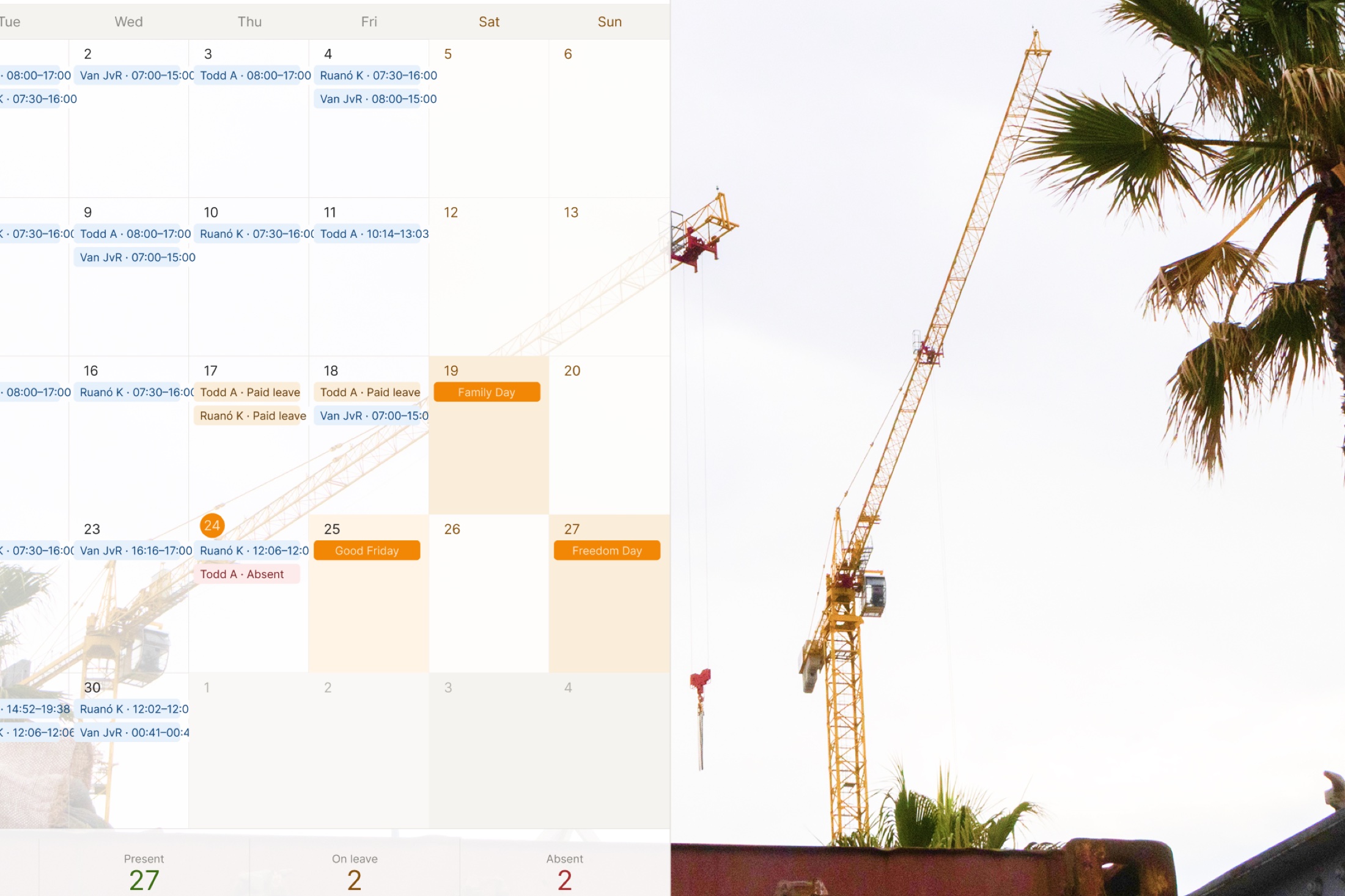
A leave tracker matters because annual leave is not a once-a-year event. It is a rolling calculation tied to time worked, leave taken, contract dates, and final pay. Once a business is managing multiple sites and different worker types, the manual process tends to break down.
A proper leave management system should track cycle start dates, balances taken, balances remaining, and the underlying attendance data that supports the accrual. When a contract ends, the final leave payout should already be visible instead of needing to be reconstructed under pressure.
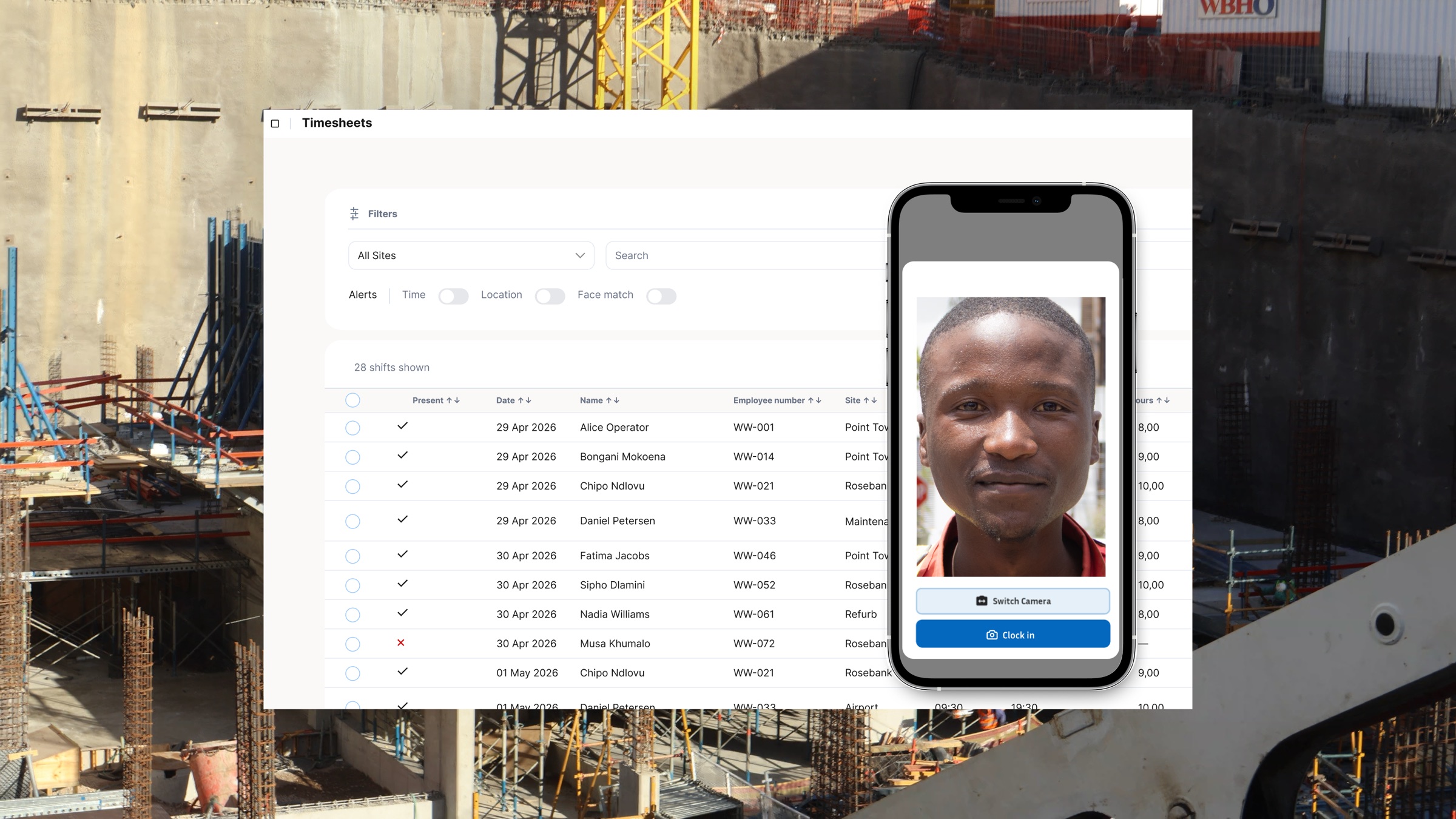
That is why time and attendance data and leave records cannot live in separate worlds. If the attendance record is weak, the leave calculation is weak. A construction business that wants accurate leave balances needs accurate time data first.
Build a Leave Process That Holds Up
Start by checking employment contracts and policy settings. The leave cycle start date, the worker type, the agreed accrual method where relevant, and the ordinary pay basis all need to be clear before the first calculation happens.
Then audit actual balances against the BCEA rules. Pull a sample of employees across different worker types and verify that the figures in payroll match the accrual method that should apply to them. If the numbers do not reconcile, the business already has a gap worth fixing before it becomes a claim.
Construction businesses do not need a complicated annual leave process. They need an accurate one. Once the right rules and the right time data are in place, the calculations become routine instead of risky.