A qualified scaffolder on a Johannesburg commercial project gives three days' notice and walks to a competitor for R3,200 more per month. The foreman spends six weeks finding a replacement. Across South African construction, this is no longer an isolated story. Wages are rising faster than many site managers and ops managers planned for.
The Forces Pushing Construction Wages Up
Infrastructure work, private developments, and specialist trade shortages are all competing for the same finite pool of skilled labour. When several projects need the same electricians, plumbers, boilermakers, and scaffolders at the same time, market wage rates move before your annual budget cycle catches up.
The skills supply side has not kept pace with demand. Contractors that cannot source the workers they need locally start competing on wage to attract them from rival sites. That pushes the market up for every contractor trying to keep a programme on schedule.
The National Minimum Wage increased from R28.79 to R30.23 per hour on 1 March 2026. That sets the floor for general labourers, but skilled tradespeople often earn well above the minimum. Their wage pressure is driven less by the statutory floor and more by scarcity, experience, and certification.
Why Skills-Based Pay Changes the Negotiation
A flat annual percentage increase no longer works when one crew includes general labourers, apprentices, certified tradespeople, and leading hands. A Red Seal tradesperson reduces rework, handles more complex tasks, and carries more programme value than an unqualified worker in the same broad category. If your pay bands ignore that, your competitors will not.
Managing differentiated pay bands requires clean records. You need to know each worker's rate, qualification level, overtime exposure, leave balance, and site allocation. That is where workforce management software becomes a retention tool, not only an admin system.
Labour law south africa changes and contractor classification risk add more complexity. A worker's pay structure, hours, and contract status need to tell the same story. If payroll, HR, and site records disagree, wage conversations quickly become compliance problems.
A Payroll Calculator for a 12-Person Crew
Consider a crew of 12 workers: six general labourers at R8,500 per month, four qualified tradespeople at R20,000 per month, and two leading hands at R26,000 per month. The monthly payroll baseline is R183,000. Annualised, that is R2,196,000 before overtime, leave payouts, or bonuses.
Apply a 5.2% market wage increase across the crew and you add R114,192 per year. Add a 3% skills premium for tradespeople and leading hands with recognised trade qualifications, and the increase grows by another R47,520. Together, the budget moves by about R161,712 per year before any overtime is considered.
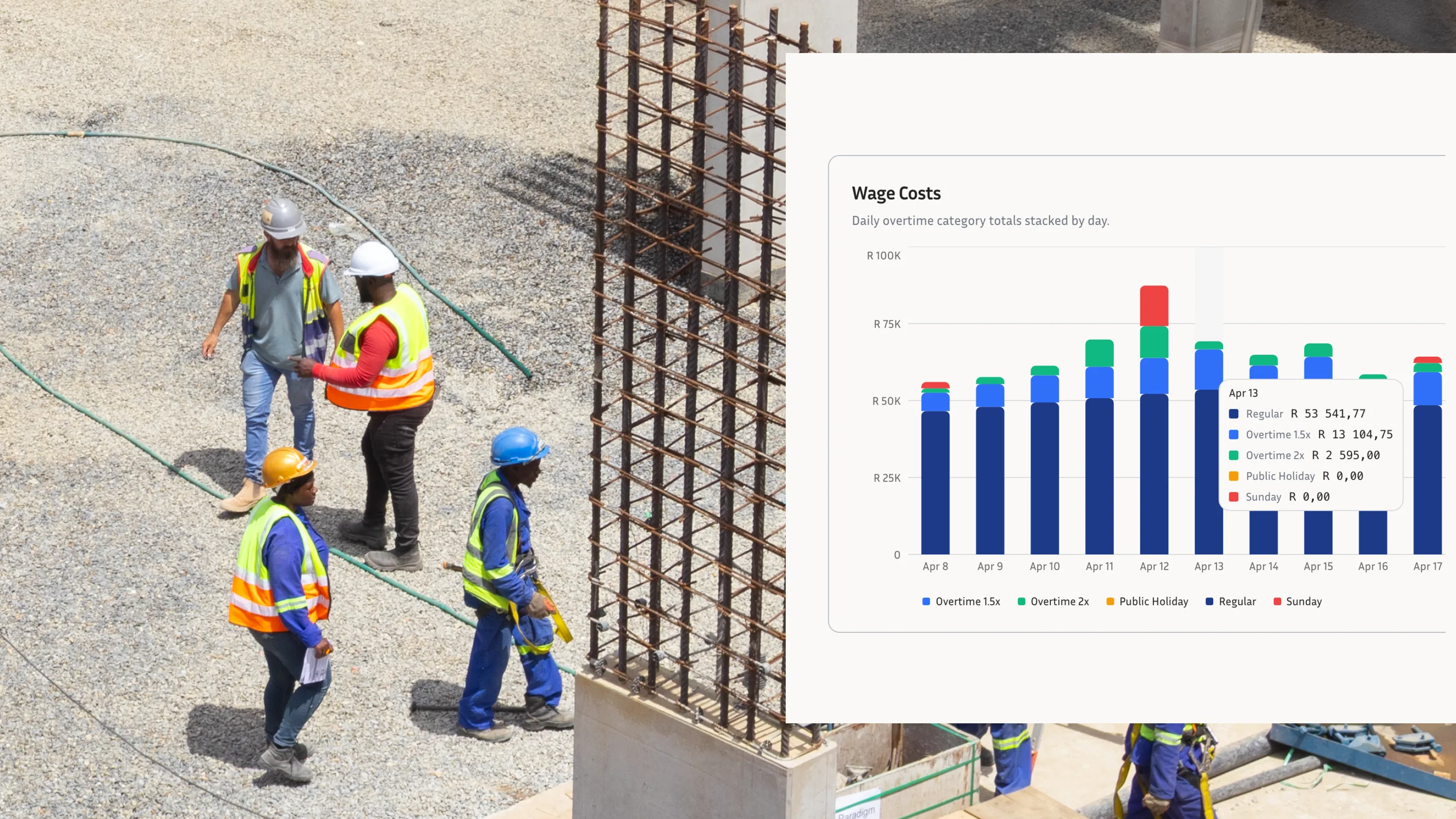
Overtime can change the number again. A tradesperson earning R240,000 per year sits below the BCEA earnings threshold of R269,600.90 effective 1 May 2026, so statutory overtime protections can apply. Five additional hours per week at the correct rate can materially change the monthly payroll position.
Retention Starts With Accurate Payroll
Skilled workers do not leave only for headline pay. They leave when overtime is calculated incorrectly, leave balances do not match expectations, deductions are unexplained, or the employer seems careless with earnings. Fixing those issues costs less than replacing a qualified artisan.
Accurate and timely payroll is one of the strongest retention levers available to a site manager. A worker whose hours are captured correctly and whose payslip matches those hours has a reason to trust the employer. Payroll software south africa only delivers that trust when the time data feeding it is clean.
A clear skills-based pay progression also helps. Publish the pay band linked to each qualification level, and workers can see how training translates into future earnings. Workforce management software should then hold the records that prove the qualification, site history, hours, and pay band are aligned.
Plan for the Wages That Are Coming
Construction wages are unlikely to trend downward while skilled labour remains scarce. The businesses that keep their best workers will combine fair pay structures with accurate payroll, transparent progression, and clean attendance records. Labour law south africa compliance sits underneath all of that because pay trust disappears quickly when records are weak. Treat labour law south africa requirements as part of the retention plan, not a separate admin chore.
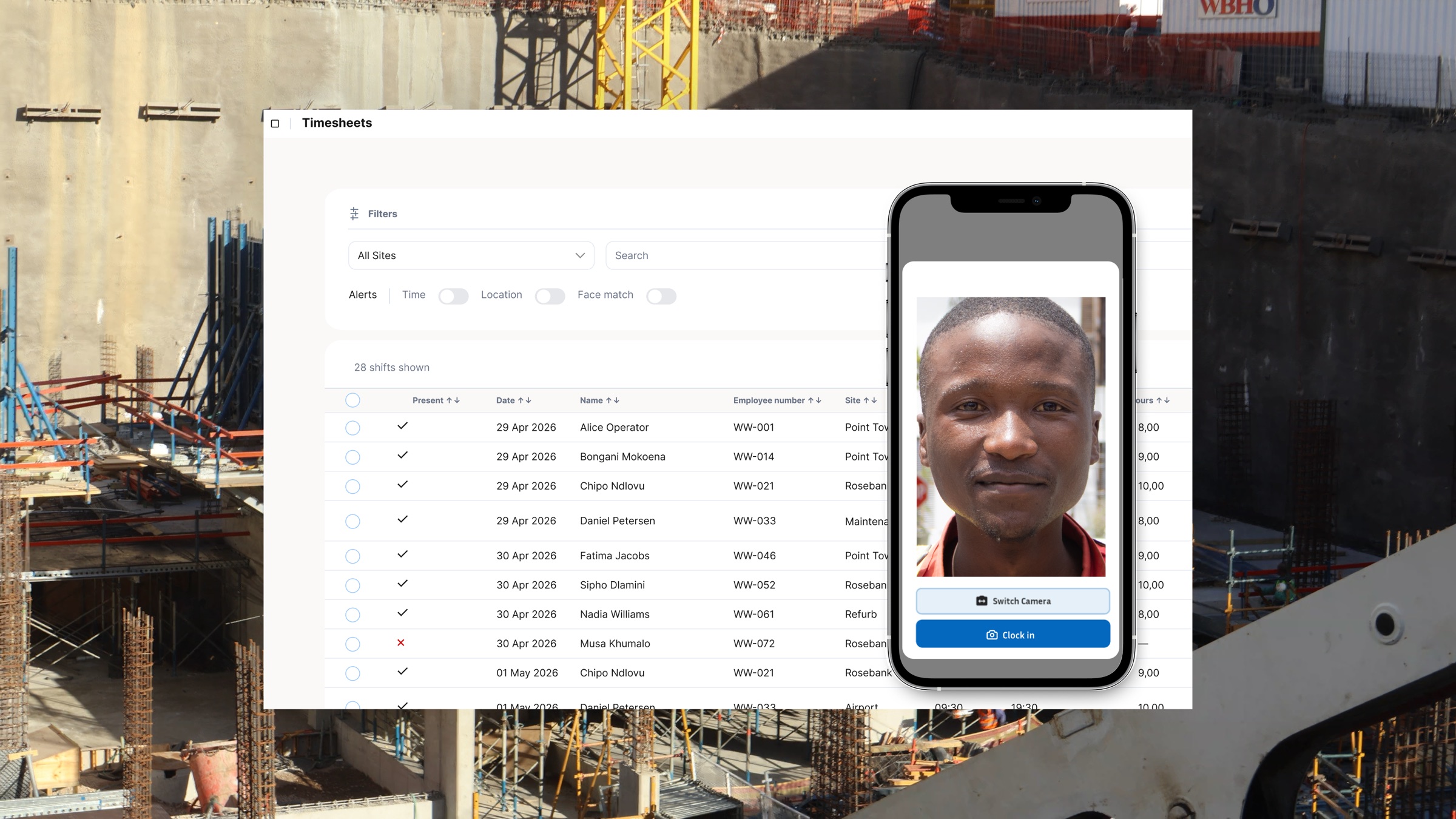
WorkWeek gives site managers verified clocking data, multi-site visibility, and payroll-ready exports so wage decisions are based on what happened on site. It works alongside payroll software south africa processes instead of leaving managers to rebuild hours from paper. That makes workforce management software part of the retention strategy, not a back-office afterthought. When payroll software south africa teams can trust the hours, they can focus on keeping skilled people rather than fixing avoidable disputes.