South Africa's public-sector infrastructure spending over the 2026 medium-term expenditure framework is estimated at R1.07 trillion. That pipeline is increasing pressure on skilled construction crews, and experienced tradespeople have more options than they had a few years ago. The sites that keep their best crews will not simply be the highest-paying ones: they will be the ones that pay correctly, handle BCEA overtime without error, and give workers confidence that what they are owed is what they get. This article breaks down the structural drivers behind the shortage and gives site managers a concrete three-step crew retention strategy grounded in payroll accuracy and operational reality.
The Structural Drivers Behind the Skills Shortage
This shortage didn't start with the infrastructure pipeline announcement. Three overlapping pressures have been narrowing the talent pool for years, and the pipeline has made all three visible at the same time.
The first is the ageing workforce. Many South African construction sites rely heavily on experienced tradespeople who have carried practical site knowledge for decades. As those workers retire or move into supervisory roles, there is no short cycle to replace their judgement on complex work.
The second is a thinner apprenticeship pipeline. Many construction businesses that once ran in-house apprenticeship programmes reduced or paused them during leaner years. The result is a visible cohort gap: too few workers in the 25-35 age bracket with verified trade qualifications ready for supervisory roles.
The third is demand-side pressure from the public infrastructure pipeline itself. National infrastructure projects, ranging from road rehabilitation to water treatment upgrades and energy infrastructure, draw workers away from smaller regional contractors. A civils foreman who has worked for your mid-sized firm for five years now has competing site managers calling regularly, and the call volume will increase through 2026, not decrease.
What a 5% Wage Increase Actually Costs on a 50-Person Crew
A 5% wage movement sounds manageable in isolation. On a 50-worker construction crew averaging R12,000 per month per worker, that increase adds approximately R30,000 to your monthly wage bill, and over a 12-month project, that is R360,000 in additional labour cost compared to the prior budget year before any overtime or premium pay is factored in.
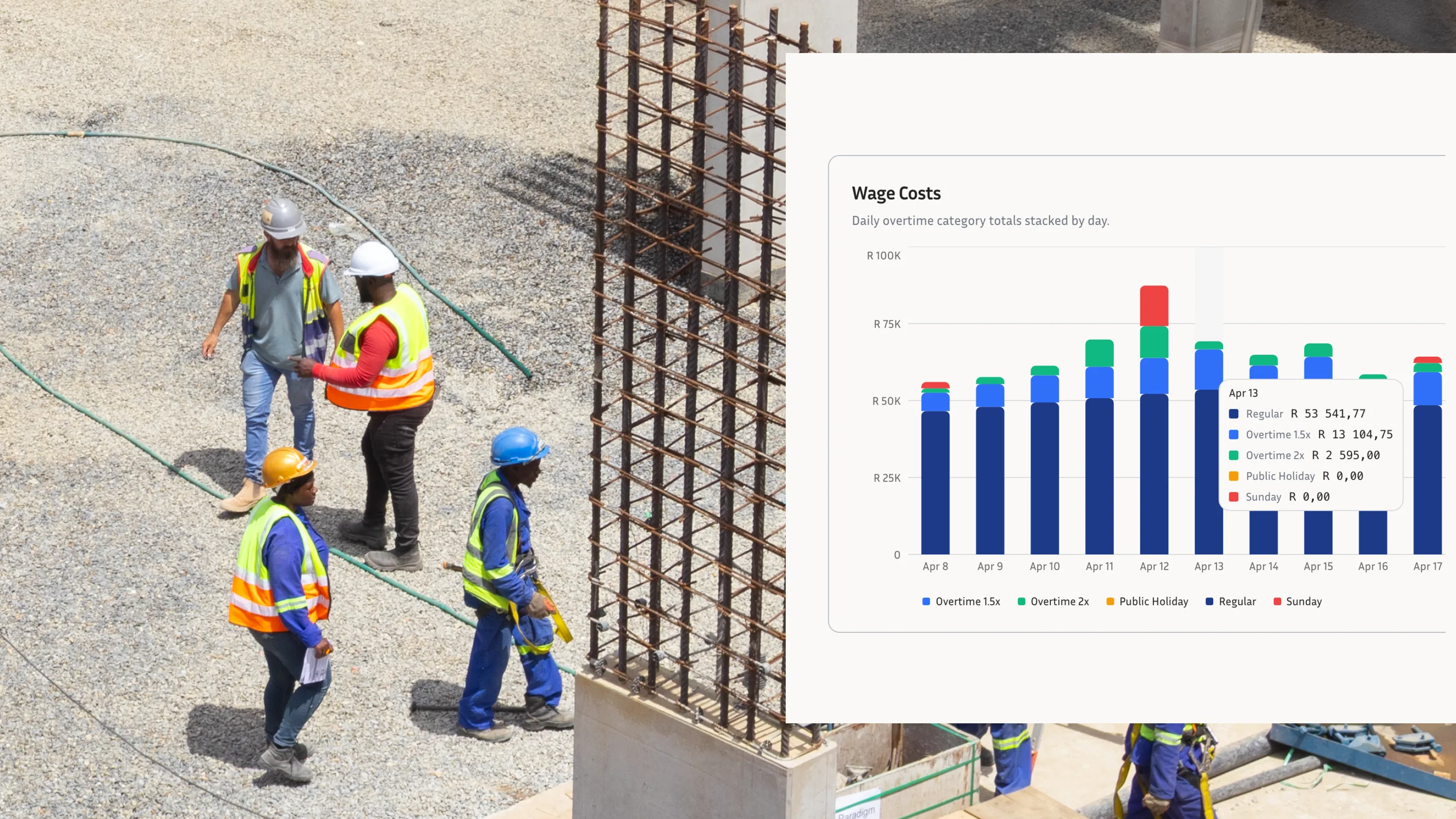
Skills-based pay compounds this. Experienced tradespeople command a measurable premium above entry-level rates, and every percentage increase is calculated on a higher starting figure. The overtime rate applicable under South Africa's BCEA runs at 1.5x the worker's ordinary rate: when that ordinary rate is higher, the overtime liability per hour is higher too.
For businesses running multiple active sites, the cumulative pressure on labour cost per project in South Africa becomes a financial planning problem that manual systems can't resolve cleanly. A site budgeted on last year's rates will show cost overruns that aren't anyone's individual fault: they're the result of structural wage movement through an undersupplied sector. The question isn't whether your labour costs will rise. The question is whether your tracking and payroll systems catch those increases accurately before they turn into disputes, underpayments, or a skilled worker deciding the site down the road pays more reliably.
For a cost model across different crew types and a longer planning horizon, the breakdown in Why Construction Wages Are Rising Faster Than You're Planning For covers the forecasting framework in detail.
Why Payroll Accuracy Has Become a Retention Tool
When skilled workers have genuine choices, small payroll problems become resignation decisions. A formwork carpenter who notices his overtime calculation is short by R380 this month, and then again next month, doesn't file a grievance with HR: he accepts the call from the competing site.
This is the connection most site managers miss. Crew retention isn't only about the pay rate on the offer letter. It's about ongoing confidence that the pay is right every single cycle. Workers who trust that their hours are counted correctly, that their BCEA overtime is calculated at the correct multiple, and that their leave balance is accurate, are workers who don't spend lunch breaks checking their phones for other opportunities.
Three specific payroll errors are driving worker departures in the current environment. First: incorrect BCEA overtime calculations. The standard 45-hour weekly threshold triggers overtime pay under the Basic Conditions of Employment Act, but manual timesheet processes frequently miscalculate this, either underpaying workers or catching errors only after a dispute has already started. Second: leave balance discrepancies. A skilled worker approaching the end of a project who expects 15 days of accrued annual leave but sees 11 days on their payslip won't wait for the reconciliation: they'll take a job elsewhere where the numbers make sense. Third: inconsistent shift records between site foremen and payroll offices, where two workers on the same shift end up with different hours recorded because of manual re-entry at the payroll desk.
A reliable employee clocking system removes the manual transcription step where most of these errors originate. When hours are captured digitally at the point of work, the foreman's handwritten tally and the payroll processor's re-entry are both removed from the chain, and so are the errors they introduce.
A 3-Step Crew Retention Strategy for Site Managers
Step 1: Audit your current payroll accuracy before a skilled worker does it for you.
Pull the last three months of overtime records for your leading hands and experienced tradespeople. Cross-check the hours your clocking system for employees recorded against what was paid. Look for patterns: consistent small underpayments on BCEA overtime, leave balances that don't reconcile with calendar days worked, and Sunday or public holiday rates that weren't applied correctly. One proactive correction communicates more to a valued worker than three retention bonuses paid after the relationship has already frayed.
Step 2: Give workers visibility over their own time records.
Experienced tradespeople who can see their hours, their overtime balance, and their leave accrual in real time have fewer reasons to distrust the payroll process. This isn't about surveillance: it's the reverse. A worker who can verify his own record before the payroll run closes has no reason to leave the site on payday because the numbers look wrong. Time and attendance software that surfaces individual records to workers eliminates an entire category of trust failure, particularly on multi-site operations where workers may not have easy access to the payroll office. Using an annual leave calculator that matches South African BCEA standards and making that calculation visible to workers is a straightforward retention step that costs nothing beyond system setup.
Step 3: Close the gap between clock-in data and payroll processing.
The gap between what a timesheet app or attendance management system records and what a payroll processor enters manually is where skilled workers' pay gets wrong. A payroll-ready export workflow, where digital clock-in data moves into payroll review without re-keying, means the skilled rigger who worked 49 hours this week can be paid from the same verified source record. No interpretation, no rounding, no query on payday. For businesses using tools like SimplePay or Sage for payroll software in South Africa, export-ready clocking data is what makes this step practical rather than aspirational.
How Workforce Management Software Holds Labour Costs Together When Wages Are Rising
Rising wages don't break construction businesses on their own. What breaks businesses is rising wages combined with labour waste that never shows up in the reporting. Ghost hours, buddy punching, incorrect BCEA overtime calculations, and workers recorded as present during travel rather than productive site time all inflate actual costs above the already-higher 2026 wage rates, in ways that paper-based systems never surface.
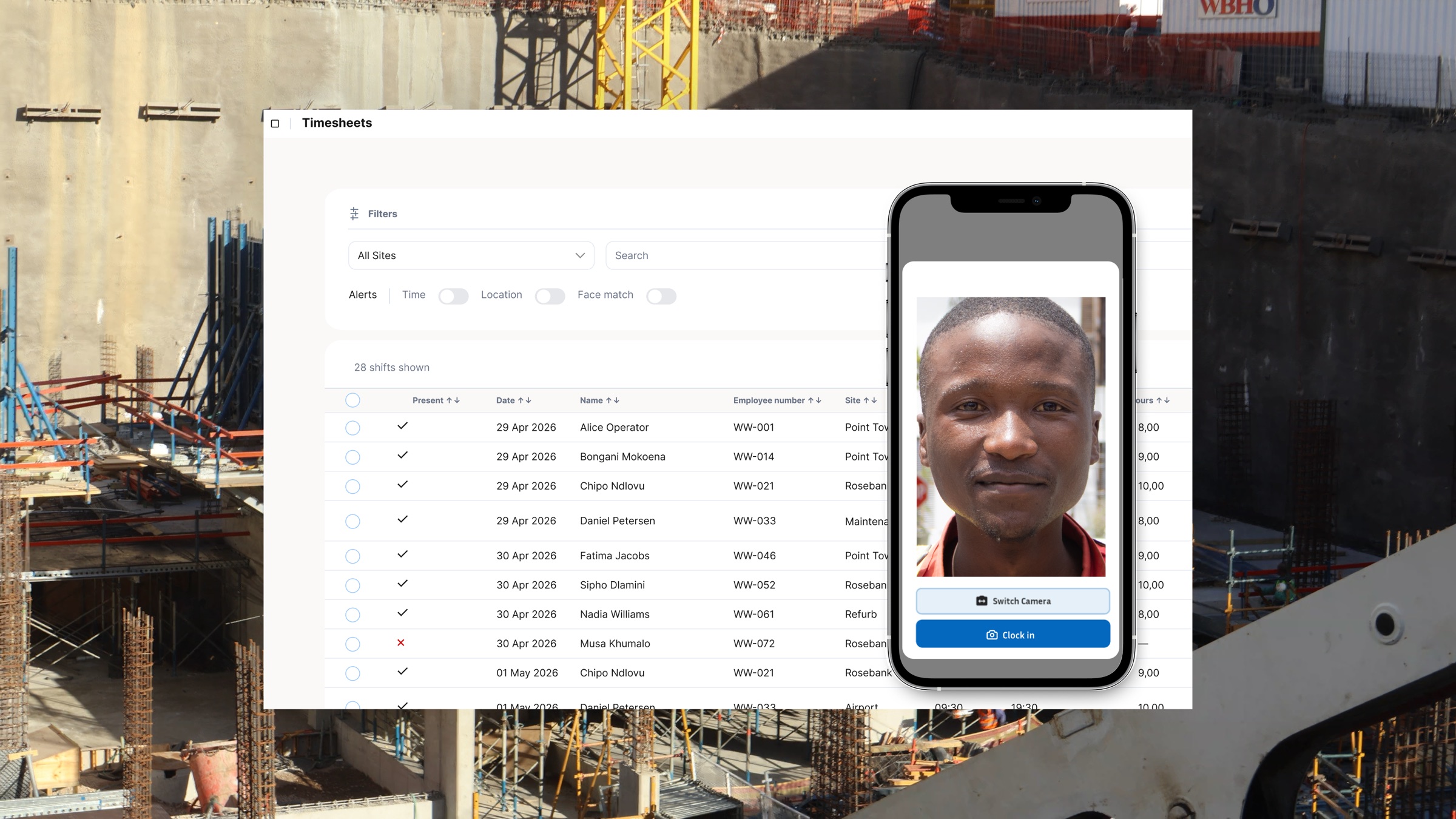
Workforce management software built for construction sites captures time at the point of work, not at the payroll desk days later. Facial clocking confirms that the person clocking in is the person assigned to that site. GPS verification confirms the location. Both functions operate from a tablet or smartphone at the site gate, without fixed biometric hardware, which matters on projects where crews move between active sites.
For businesses running HR software integrations in South Africa, the relationship between verified clocking records and payroll review also gives project-level cost visibility. Site managers can see whether a particular site is running over its labour budget before month-end rather than six weeks after the fact. That visibility enables reallocation decisions at the right time, not in a post-mortem conversation with the client. A biometric clocking system comparison on the WorkWeek blog covers the tradeoffs between fixed hardware and mobile-first identity verification, which is a practical decision for businesses managing crews across multiple sites under the current pipeline pressure.
The combination of identity-verified clock in systems, automatic BCEA overtime calculation at the correct rate, and a leave management system that reconciles accrual automatically means the payroll processes underpinning retention are handled consistently by the system, not by whichever foreman happened to fill in the weekly sheet.
Keeping the Workers You've Invested In
The skills shortage in SA construction won't ease before 2026 ends. The infrastructure pipeline will continue drawing experienced workers toward the highest bidder, and the highest bidder doesn't always win the retention battle. The most operationally trustworthy employer often does. Getting overtime calculations right, keeping leave balances accurate, and giving workers transparency over their own records costs substantially less than recruiting a replacement site foreman mid-project and waiting three months for them to learn the site.
WorkWeek is built for exactly this environment: sites with turnover pressure, multi-site complexity, and wage compliance that can't rely on manual re-entry. Book a demo and see how construction businesses across South Africa are using verified clocking and automated payroll data to hold their best crews in place through the most competitive labour market in a generation.