At 06:45 on a live construction site, theory disappears. What matters is whether teams are on the ground, whether supervisors can get the day moving without delay, and whether head office can trust the numbers that flow into payroll and reporting.
That is the real choice when comparing WorkWeek to biometric hardware systems. This is not simply a technology decision. It is an operating model decision.
Both approaches are trying to solve the same problem: accurate attendance, stronger accountability, and better control. But they solve it in very different ways, and those differences matter on construction sites where labour moves, conditions change, and speed matters.
What biometric hardware systems do well
Biometric hardware systems are built around physical devices on site, often using fingerprint, facial recognition, palm verification, or access control readers at a fixed point. Many providers also position these systems alongside payroll integration, visitor management, and broader workforce control tools.
In the right environment, that can be powerful. If your site has a controlled entrance, a stable process, and you want attendance tied tightly to physical access, hardware can create a clear checkpoint that management can point to with confidence.
The main benefits are usually:
- A fixed clocking point that can feel formal and enforceable
- Strong alignment with access control when entry gates are part of the operating model
- A familiar option for businesses that already use hardware-based security systems
- Potentially useful for static sites where the workforce enters through one predictable route
Where biometric hardware can become heavy on construction sites
Construction is rarely neat. Crews change, subcontractors rotate, access points move, and not every site is set up for fixed infrastructure. That is where hardware can start to feel less like control and more like drag.
The common pitfalls are not usually about the technology itself. They are about the weight it adds to deployment and daily operations.
Directors should think carefully about these trade-offs:
- Hardware must be bought, installed, powered, protected, and maintained
- If the site layout changes, the attendance process may need to change with it
- Queues can build at one clocking point during morning rush and shift changes
- Rollout across multiple sites can take longer and cost more than expected
- Short-term projects and temporary labour can make fixed infrastructure harder to justify
- If a device fails, the site still needs a fallback process that payroll can trust
What WorkWeek does differently
WorkWeek takes a lighter, faster route. Instead of asking the site to bend around hardware, it is designed to work with the site as it is today.
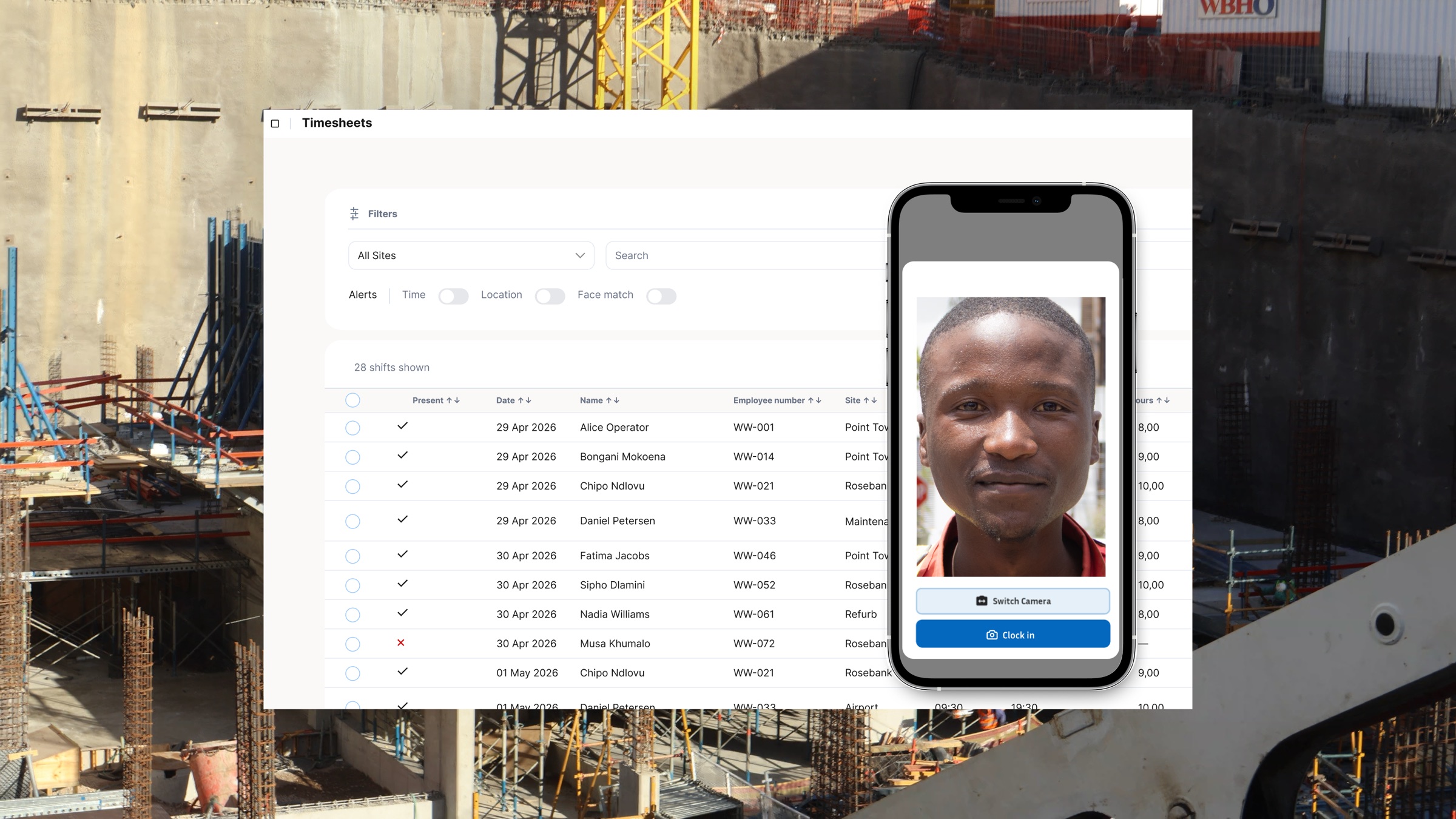
It is mobile first, built for on site teams, and does not require specialised hardware. Supervisors can clock in entire teams from a single smartphone. Clock events are geo-located, time-stamped, and supported by photo-based verification with face matching in the dashboard. The app is also data-free and works offline, which matters in real site conditions.
For directors, the attraction is simple. You can move quickly without waiting for infrastructure. You can start with one site, prove value, and expand without carrying the cost and friction of a hardware rollout.
The main benefits of WorkWeek are:
- No specialised hardware required, which lowers setup friction and upfront cost
- Faster rollout across multiple sites, including temporary and changing project environments
- Offline and data-free usage, which removes two major barriers to consistent adoption
- Supervisors can record a full team's attendance quickly without forcing every worker through one device
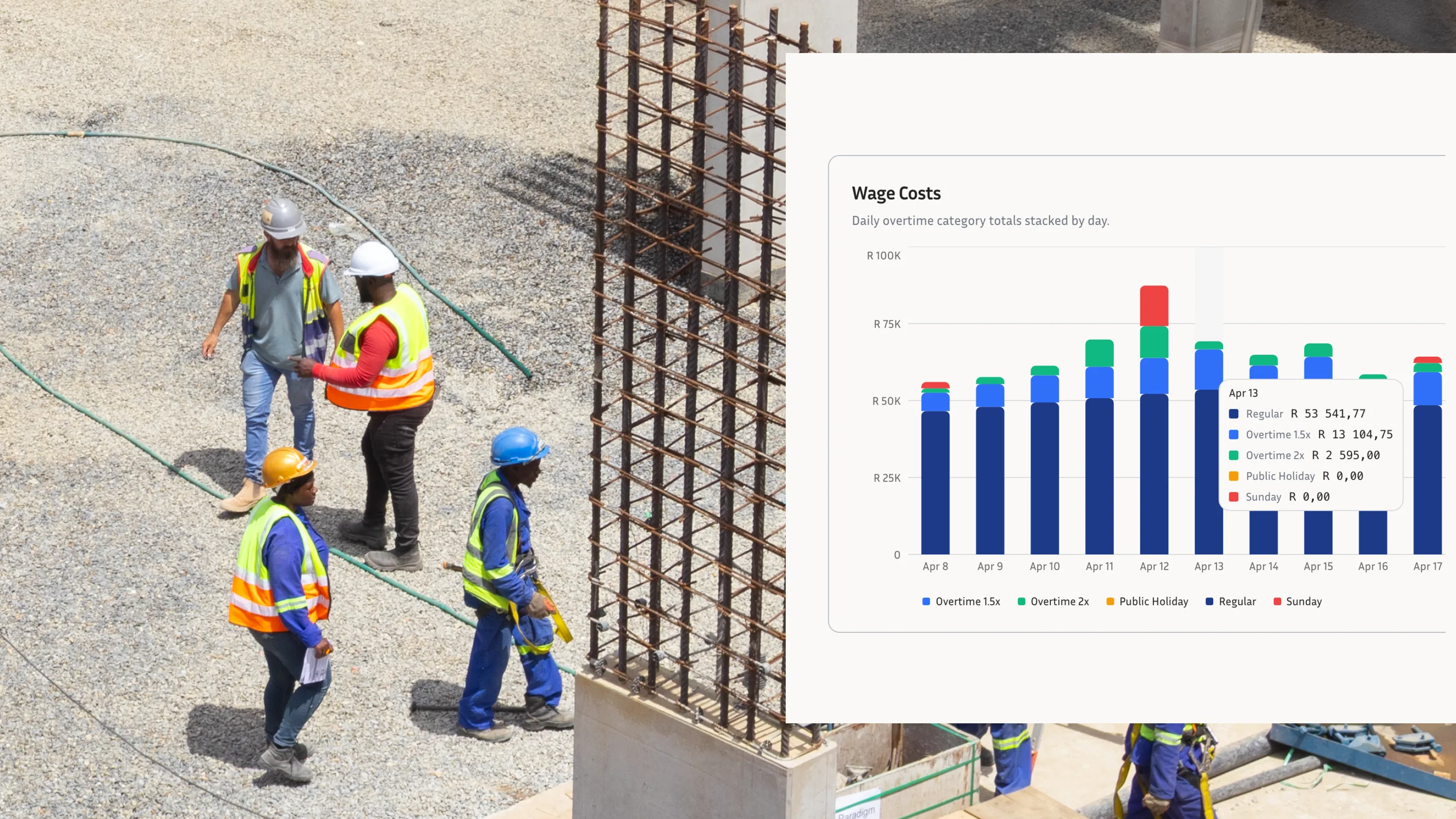
- Head office gets one live view of attendance, sites, projects, and labour reporting
- It is easier to trial, easier to scale, and easier to adapt as operations shift
Where WorkWeek is not the perfect fit
A fair comparison also means being clear about the limits. WorkWeek is designed for operational flexibility, not for every possible site control model.
Its trade-offs are usually these:
- If your business wants attendance to be inseparable from a physical gate or turnstile, fixed hardware may align more naturally with that requirement
- Mobile-led systems still depend on supervisors following process consistently
- Some businesses may prefer the visible presence of a dedicated clocking device, especially when changing entrenched habits
That said, for many construction businesses, those trade-offs are far lighter than the burden of buying and managing hardware across every site.
Which option suits a construction director best?
If you run highly controlled, permanent sites with fixed entry points and you want attendance linked directly to access control, biometric hardware can make sense.
If you run multiple sites, deal with changing crews, need speed, and want strong visibility without heavy infrastructure, WorkWeek is usually the more practical choice.
In plain terms, biometric hardware is often about controlling a doorway. WorkWeek is about controlling the operation.
Final thought
The best attendance system is not the one with the most machinery. It is the one your sites will actually use every day, the one payroll can trust at month end, and the one that gives leadership a clear view of labour without slowing the job down.
For construction directors, that is where the magic lives. Not in the device itself, but in the calm that comes from knowing your operation is visible, accountable, and moving on time.